Key Takeaways
- What you pay for engine oil is shaped by three things: the quality of the base oil, the additive package, and the formulation tier.
- Base oils make up the bulk of an engine oil formulation and are the primary cost driver between mineral, semi-synthetic, and fully synthetic products.
- The additive package is what separates a basic lubricant from a performance-grade engine oil.
- Choosing oil purely by price can cost more in the long run through increased engine wear, shorter service intervals, and more frequent oil changes.
- Supplemental additive products extend the useful life of any formulation and protect components between service intervals.
Introduction
Pick up two bottles of engine oil from the same shelf. One costs more than the other. The viscosity grade is the same. The API rating looks similar. But the price is different. Most drivers choose the cheaper one without knowing what they’re giving up.
Engine oil isn’t a single ingredient. It’s a formulated product with a base oil, an additive package, and sometimes a proprietary technology layer. Each of those layers has a cost. And each of them does a specific job inside your engine that the cheaper version may not be able to match.
This guide breaks down what actually goes into that price difference, what you’re getting at each tier, and how supplemental products fit into your total maintenance spend.
What Does Engine Oil Cost Mean?
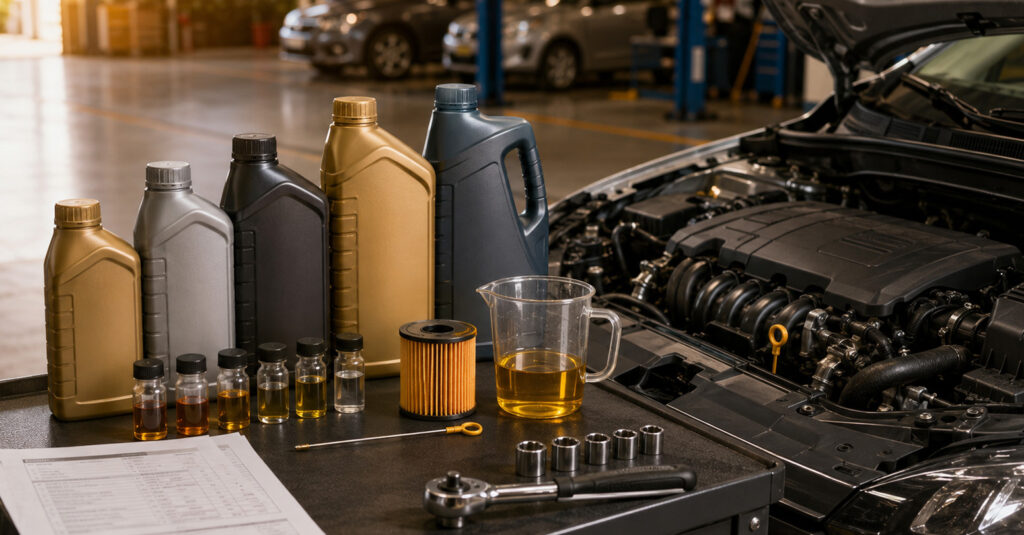
Engine oil cost refers to the price you pay per litre or per change for a lubricant that meets your engine’s specification. The figure you see on a bottle reflects the base oil grade, the quality and concentration of the additive package, the formulation tier (mineral, semi-synthetic, or fully synthetic), and the research and testing behind the product. A higher price doesn’t always mean better oil for your specific vehicle, but a significantly lower price than comparable products usually signals a compromise somewhere in the formulation.
What Makes Up The Cost of Engine Oil?
Engine oil has two main components: the base oil and the additive package. Base oil makes up the majority of an engine oil formulation by volume, making it the biggest cost driver. Additive packages make up the rest of the formulation and are the primary lever for performance differentiation.
Base Oil Quality
Base oils are classified by the American Petroleum Institute into five groups. Group I and II are mineral base oils produced through refining crude petroleum. Group III is a highly refined mineral oil with performance characteristics approaching synthetics. Group IV refers to polyalphaolefin (PAO), a fully synthetic base stock. Group V covers other synthetic bases, including esters used in high-performance formulations.
Moving from Group I through to Groups IV and V, the molecular structure becomes more uniform, the thermal stability increases, and the price goes up. A fully synthetic engine oil uses a more expensive base stock. That cost is what gives it better oxidation resistance, a wider useful temperature range, and a longer drain interval compared to mineral oil.
Estremo’s P5 mineral line uses a Group II mineral base, suited for standard passenger car engines and older vehicles. The P7 semi-synthetic range blends mineral and synthetic base stocks to balance performance and cost. The HeatPro line uses Double Ester base fluids, which sit in Group V. Ester-based oils have a naturally high viscosity index and excellent film strength at high temperatures, which is why this technology costs more and delivers more in demanding conditions.
The Additive Package
The additive package is what the engine actually relies on when the oil is under stress. Every formulation contains detergents to clean engine surfaces, dispersants to hold contaminants in suspension, anti-wear agents to protect metal-to-metal contact points, viscosity index improvers to maintain stable flow across temperatures, antioxidants to slow degradation, and friction modifiers to reduce energy loss. A more concentrated and higher-quality additive package costs more to produce. That cost is passed through to the price on the shelf.
Premium engine oils include higher-grade additive packages that perform at wider temperature ranges, hold up longer between drain intervals, and maintain viscosity more accurately under high thermal load. A basic formulation uses a minimal additive package that meets the floor requirements of its API rating but doesn’t deliver the same protection when the engine is working hard.
The additive package is also where OEM approvals are earned. BMW, Mercedes-Benz, Volkswagen, and other manufacturers specify performance tests that go beyond the base API rating. Passing those tests requires a formulation with specific anti-wear and deposit control performance at elevated temperatures. The testing, certification, and higher additive quality are all part of the cost of a specification-approved oil.
Why Cheaper Oil Can Cost More Over Time
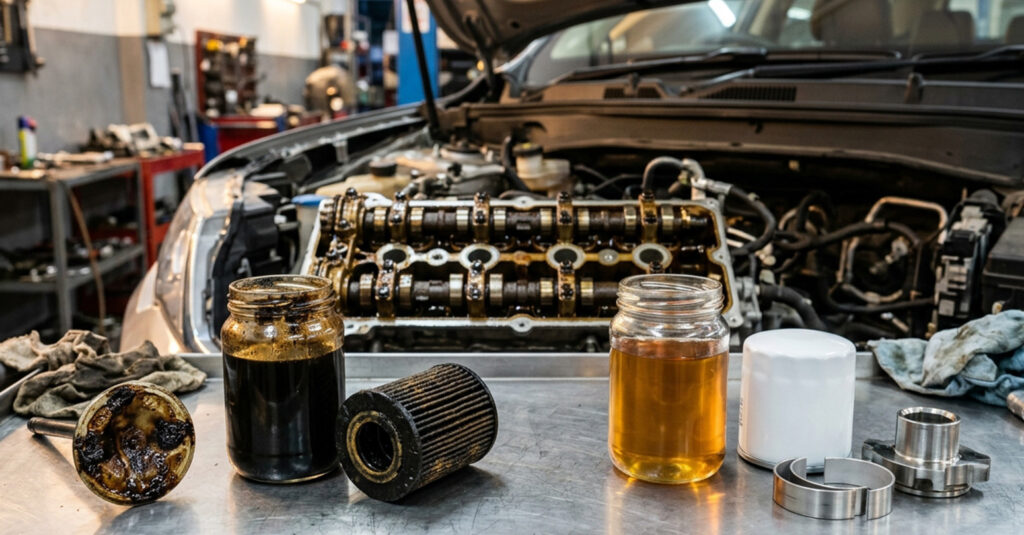
An engine oil’s real cost isn’t just what you pay at the service counter. It includes how long the oil performs before it needs to be changed, what happens to the engine while it’s running on that oil, and what repair costs follow.
Mineral and low-grade semi-synthetic oils oxidise faster under heat and stop-start conditions. Once oxidation starts, the oil thickens, loses its flow properties, and begins to form sludge on internal components. Sludge restricts oil flow to bearings and valve trains. Bearings wear faster. Valve train deposits accumulate. The engine needs more frequent oil changes just to stay ahead of this cycle, which adds up.
Choosing oil based on the lowest upfront cost is a reasonable instinct, but the actual cost of engine oil is measured in service intervals, engine cleanliness, and the wear rate on components that cost far more than the oil itself to replace.
High-quality engine oil, properly matched to the vehicle’s specification and driving conditions, often works out to less cost per kilometre driven than frequent changes of cheap mineral oil. The drain interval is longer. The engine stays cleaner. The components last longer.
Where Engine Oil Additive and Treatment Products Fit In
A supplemental additive is not a substitute for choosing the right base oil. It extends what the base oil does, targets specific protection gaps, and maintains performance between service intervals.
Estremo’s nano-technology additive line is built around this principle. Each product addresses a specific function in the broader maintenance picture.
Nano Oil Care is added to fresh engine oil at every oil change. Using nanotechnology, it forms a protective layer on engine components to prevent metal-to-metal contact and reduce wear. Add 250ml per 4 to 5 litres of engine oil. It works with mineral, semi-synthetic, and fully synthetic formulations.
Nano Oil Cleaner is a pre-change flush product. Add 250ml to the existing engine oil before a drain, run the engine for 10 to 15 minutes, then drain as normal. It removes sludge and deposits built up since the last change, ensuring the fresh oil goes into a clean system rather than mixing with residual contamination.
Nano MoS2+ uses molybdenum disulfide nanoparticles combined with anti-wear additives to reduce friction at a molecular level. Add 250ml per 4 litres of engine oil. It reduces engine drag, lowers vibration, and supports fuel efficiency by cutting internal resistance.
Nano Engine Protector 1 adds a supplemental protection layer for engines running in demanding conditions or with higher mileage where the standard additive package in the oil needs reinforcement.
These products are most useful in three situations: engines with higher mileage where the internal clearances have widened, vehicles coming off a period of neglected servicing, and turbocharged engines running sustained high loads where base oil protection alone may be reaching its limit.
How to Read Engine Oil Cost Against Specification
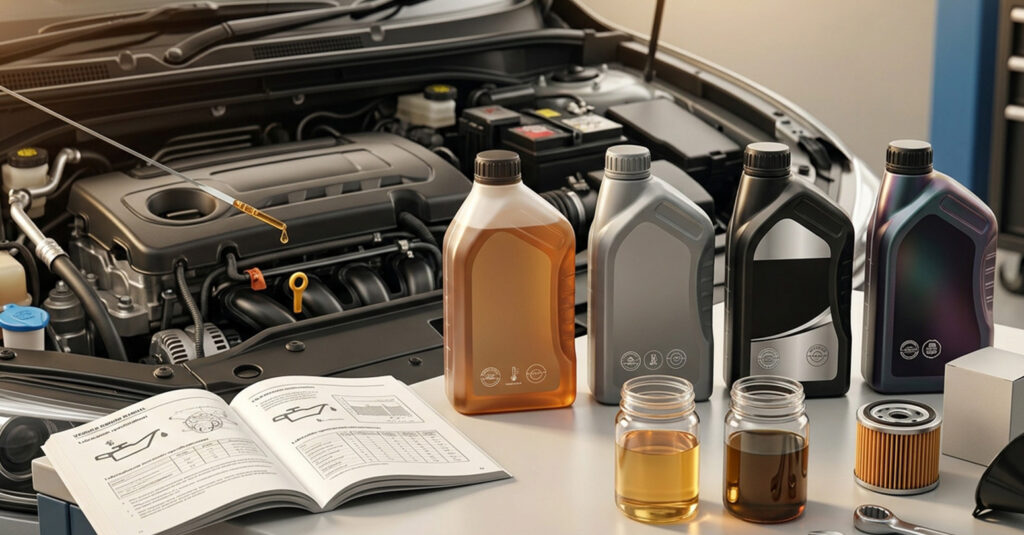
Not every vehicle needs the most expensive oil available. Matching oil specification to the engine type is the starting point for making a sensible cost decision.
Your owner’s manual specifies a viscosity grade (such as 5W-30 or 0W-20) and an API service category (such as API SN or SP). Any oil that meets or exceeds those specifications will protect the engine correctly. The question then becomes which formulation tier and which additive level your engine actually needs.
The engine oil cost that makes sense for your vehicle is the one that meets your OEM specification, supports your drain interval, and holds up under the way you actually drive.
Estremo’s P5 mineral range meets API SN and suits older naturally aspirated petrol engines on tight 5,000km change intervals. The P7 semi-synthetic range suits modern naturally aspirated engines running 5,000 to 8,000km intervals. The P9 fully synthetic range meets OEM approvals including BMW LL-01, Mercedes-Benz 229.3 and 229.5, and Volkswagen 502.00/505.00, making it suitable for European vehicles where specification compliance is a warranty condition. The HeatPro Fully Synthetic Double Ester range takes that further with Double Ester base fluids and Estremo’s proprietary HeatPro technology, designed for turbocharged engines, performance applications, and vehicles that run consistently hot.
Is Paying More for Engine Oil Worth It?
If your engine specifies a fully synthetic oil, using a semi-synthetic formulation to save money will shorten drain intervals and may compromise protection under high thermal load. The upfront saving disappears when you factor in the extra oil change per year. If your engine specifies semi-synthetic and you buy fully synthetic, you’re paying for protection your engine doesn’t need. The right match between specification and oil type is where value actually sits.
Getting the cost right means choosing oil that covers the full drain interval, meets the OEM specification, and keeps the engine clean enough that you’re not spending on early repairs to compensate for poor lubrication. A quality additive used consistently alongside the right base oil further reduces wear and extends the useful working life of the engine. Together, they represent better value than the sticker price of the oil bottle alone.
Frequently Asked Questions
1. What drives the price difference between mineral and fully synthetic engine oil?
The base oil group is the main cost driver. Fully synthetic oils use Group IV (PAO) or Group V ester base stocks, which require more complex production processes than the mineral-derived Group I and II stocks used in conventional oils. The additive package also tends to be more concentrated in higher-tier formulations, contributing to the higher price per litre.
2. Does a more expensive engine oil always last longer between changes?
Not always, but generally yes. Fully synthetic oils resist oxidation and thermal breakdown for longer than mineral oils, which is why they support extended drain intervals. The actual interval you should use depends on your driving conditions, engine type, and the manufacturer’s recommendation, not just the oil’s base price.
3. Can an engine oil treatment help reduce the overall cost of engine maintenance?
Yes, in two ways. First, an engine oil treatment protects internal components from wear, reducing the probability of costly mechanical repairs. Second, it keeps the engine cleaner and reduces internal friction, helping the oil perform closer to its rated specification for longer and supporting the full drain interval rather than early changes.
4. How do I know if my engine needs an engine oil additive?
Engines that benefit most from a supplemental protective additive include those above 80,000km, turbocharged engines in sustained high-load use, vehicles returning from a period of irregular servicing, and engines switching from mineral to synthetic oil where sludge deposits may be present.
5. Is the engine oil cost different for diesel and petrol engines?
The base cost structure is similar, but diesel formulations require specific additive packages to handle higher soot loads, different combustion by-products, and sometimes diesel particulate filter compatibility. A diesel engine oil meeting API CK-4 or ACEA E specifications will typically cost more than a basic petrol API SN oil because of the more demanding additive requirements.
Conclusion
The type of engine oil chosen also impacts wear levels within the engine, operating temperature, fuel economy, and cost of engine maintenance over time. The mineral, semi-synthetic, and fully synthetic options offer distinct levels of performance for different driving conditions, mileage levels and stress placed upon the engine.
The margin between engine wear, due to heat levels within the engine, traffic levels within the driving journey and overall mileage, grows the higher the value is. Correct oil selection and an effective engine oil additive alongside proper servicing will result in longer-lasting, smoother, and cleaner engines.
For over 15 years, Estremo has been at the forefront of developing lubricant technologies that are specifically formulated to withstand the high demands of roads and climate conditions in the ASEAN automotive market.
Established in 2010, Estremo has continually developed an array of mineral, semi-synthetic, and fully synthetic lubricants and engine oil additives to cater to passenger vehicles, motorcycles, and high-mileage vehicles. Heatpro technology developed by the brand aims to maintain optimal lubrication in hot conditions and high engine load.
Estremo’s range consists of SAE grades from 0W-20 up to 10W-40, as well as API SN certified formulations and OEM specifications for major brands like BMW, Mercedes-Benz, and Volkswagen. This allows consumers to benefit from lubricants designed for naturally aspirated, turbocharged, and modern multi-valve engines under all conditions encountered in real-world driving.
Besides providing a range of lubricants, Estremo has also been involved in developing engine oil additives which contribute to reduced friction, cleaner engine internals, and oil film strength between changes. All of these products are rigorously tested under Malaysian driving conditions, including stop-start city traffic, long highway drives, and high operating temperatures, making Estremo a reliable lubricant provider focused on durability and long-lasting performance. Contact Estremo today.