Key Takeaway
- The difference between standard and premium engine oil comes down to what’s inside: the quality of the base oil and the strength of the additives.
- Higher-quality base oils stay stable as the engine heats up, while cheaper ones thin out faster and break down between changes.
- Additives in premium formulations are more concentrated, which means better engine protection that lasts longer before the oil needs replacing.
- Turbocharged engines and high-revving motorcycles run hotter and place greater stress on the oil, so formulation quality matters more in those cases.
- Estremo’s HeatPro technology is built around double ester oil, which clings more firmly to metal surfaces as temperatures rise rather than thinning out.
Introduction
The engine oil shelf can feel like a lot. All the bottles look similar, the labels use similar language, and the price difference between them isn’t always obvious. So what are you actually paying extra for?
Engine oil is made up of two main parts: a base oil and a mix of protective additives. The grade on the label reflects the quality of both. Better base oil stays stable under heat. Stronger additives last longer before they run out. Together, those two things determine how well your engine stays protected and how long the oil holds up between changes.
What Is Actually Inside a Premium Engine Oil?
Why the Base Oil Grade Changes Everything
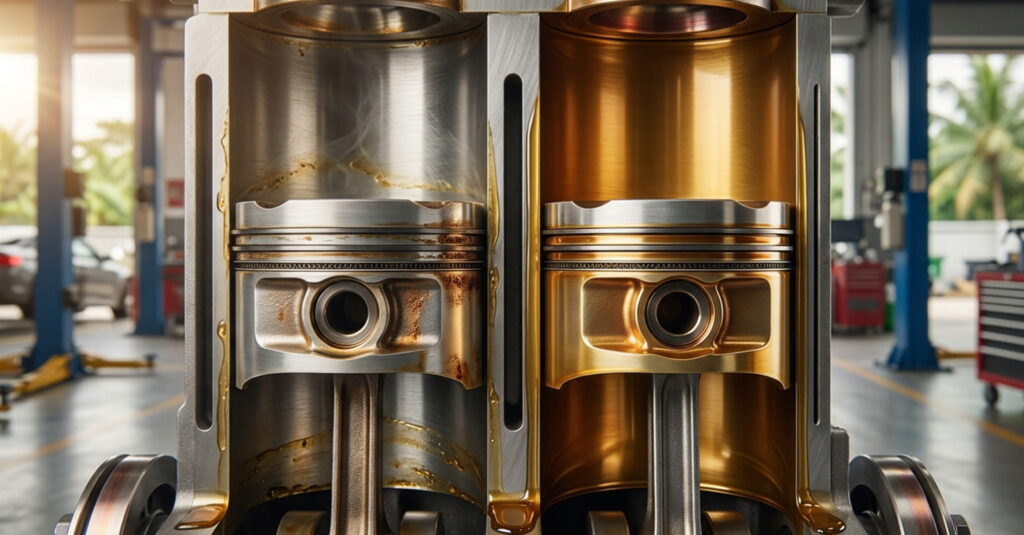
The base oil makes up roughly 75 to 85 percent of what’s in the bottle. Mineral oil is the most basic type, refined from crude. It works for standard conditions but thins out faster under heat and breaks down more quickly between changes.
Synthetic oils are manufactured rather than refined, which gives them a more consistent molecular structure. They handle temperature changes more effectively. The protective layer between your engine’s moving parts stays more consistent when things heat up, and that’s where the difference in oil performance between grades shows up most. Measurement data confirms how sharply engine oil thins as temperatures rise, and synthetics manage that far better than mineral oil.
What Additives Do and Why Concentration Matters
The remaining 15 to 25 percent is additives, and they do most of the protective work. Anti-wear compounds coat metal surfaces to cut down friction. Detergents neutralise acidic byproducts from combustion before they can attack engine surfaces. Dispersants keep carbon particles suspended in the oil so they don’t clump into sludge. Standard oils include all of these, just in lower concentrations that run out sooner. Higher-grade oils carry stronger concentrations that stay effective for longer.
Here’s where heat becomes the real issue, though. Both the base oil and the additives degrade faster as temperatures climb. A good synthetic and a concentrated additive package handle that better than the basics, but in a turbocharged engine or a high-revving motorcycle, the sustained heat pushes even quality synthetics hard. That’s the gap Estremo’s HeatPro technology was designed to fill.
A better base oil and a stronger additive package work together. The base oil holds its thickness under heat, so the additives have less work to do to protect your engine.
How Does Estremo HeatPro Technology Work?
Standard synthetic oils already outperform mineral oil in heat resistance, but they weren’t specifically built for the conditions inside a turbocharged engine. A turbocharger spins in the exhaust stream, where temperatures are far higher than anywhere else in the engine. It relies entirely on engine oil to lubricate its bearings. If that oil thins out or breaks down, it leaves deposits behind that restrict oil flow and wear out the bearings faster.
Estremo’s HeatPro technology uses a type of synthetic oil called double ester as its base. What makes ester oil different is that its molecules are naturally attracted to metal surfaces, and that attraction gets stronger as temperature rises. So when the engine is at its hottest, HeatPro clings harder to the metal rather than thinning away from it. That’s what the tagline “the hotter, the better” refers to.
Standard oils are built to tolerate heat. The engine oil technology behind HeatPro is built to work harder because of it.
HeatPro is available in passenger car grades) and dedicated motorcycle variants. Motorcycle engines share oil between the engine and gearbox, and higher RPM creates more sustained stress on the oil than a typical car engine. Ester-based oil handles that stress well.
Which Engines Benefit Most From a Higher-Grade Oil?
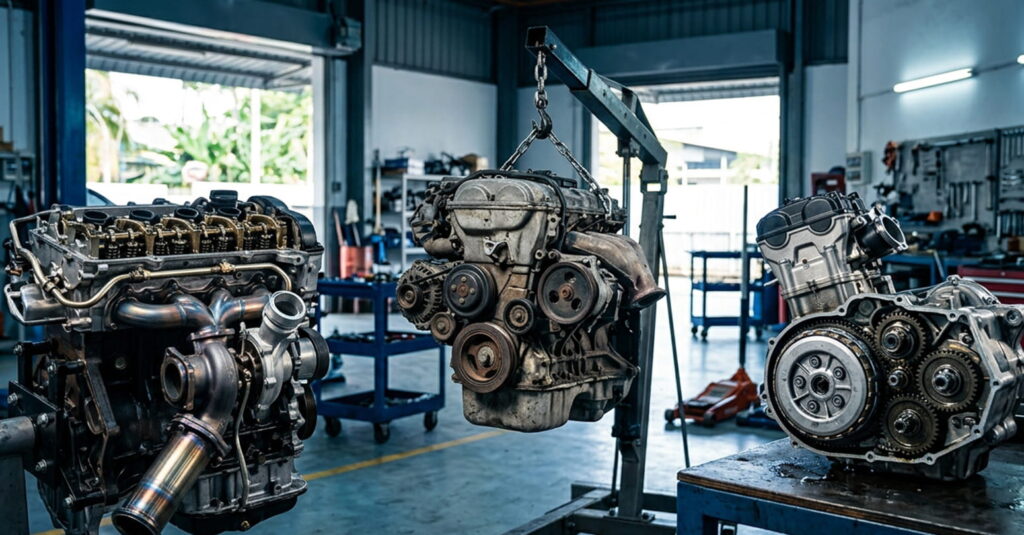
The situations below are where the gap between a standard oil and something like HeatPro is most practical.
Turbocharged Engines: Why Heat Is the Real Problem
Inside a turbocharged engine, the oil protecting the bearings is exposed to higher temperatures for longer than anywhere else in the system. A premium engine oil with better heat resistance holds that protection for longer, which matters for the lifespan of the turbo.
High-Mileage Engines and the Case for Stronger Additives
As engines wear over time, the gaps between moving parts get slightly wider. A higher-grade oil with a stronger anti-wear additive pack keeps engine protection across those wider gaps better than a standard oil.
Motorcycles That Share Engine and Gearbox Oil
When a motorcycle engine shares oil with the gearbox, it puts more mechanical load on that oil than a standard car setup. An oil built for that stress, like the HeatPro motorcycle range, holds its oil performance for longer under those conditions.
Estremo’s P9 fully synthetic is built for passenger cars and meets performance standards recommended for BMW, Porsche, and Mercedes-Benz.
Which Estremo Engine Oil Is Right for Your Engine?
If your car is turbocharged, HeatPro fully synthetic is the right fit. The double ester base handles the sustained heat a turbo produces in a way standard synthetics aren’t built for. Those turbo bearings stay protected even when temperatures stay high for long stretches.
For a standard passenger car, Estremo P9 fully synthetic covers everyday and highway driving well, and works with turbocharged, multi-valve, and catalytic converter-equipped engines.
For daily commuting, long highway stretches, and drivers focused on fuel economy, Estremo SynGlide is the better match. Its ultra-low friction formulation is built for smooth engine running and efficiency rather than extreme heat. Not sure which series fits? You can check out Estremo’s guide to choosing the right engine oil for your car comparing HeatPro, SynGlide and P Series side by side.
Adding Nano Oil Care to either oil gives an extra layer of engine protection on metal surfaces. It’s particularly useful under sustained load or in higher-mileage engines.
If you’re switching oils in an older engine with built-up deposits, an engine flush first lets the new oil circulate properly. Estremo’s engine flush guide covers when it makes sense and how to do it.
Frequently Asked Questions

1. What makes a premium engine oil different from a regular one?
The two main differences are the base oil quality and the additive concentration. Premium engine oil uses a higher-grade synthetic or ester-based base oil that stays stable under heat. It also carries a more concentrated additive mix that lasts longer before running out.
2. Is fully synthetic oil always better than semi-synthetic?
Not for every car. Fully synthetic handles heat and harder conditions better. For a standard car in everyday use, semi-synthetic meets manufacturer specs and does the job well. Check your owner’s manual for what your specific engine calls for.
3. What is HeatPro technology and how does it work?
HeatPro is Estremo’s engine oil technology built around ester base oil. Ester molecules have a natural attraction to metal, and that attraction increases under heat. So when the engine is running hot, the oil clings to metal surfaces instead of thinning away from them. It’s built for turbocharged engines and high-revving motorcycles where heat is a sustained problem.
4. Can I use a premium oil in an older engine?
Yes. Older engines have slightly wider internal clearances from normal wear. A premium engine oil with a stronger anti-wear additive package maintains better engine protection across those gaps. If there’s sludge inside, run an engine flush first so the fresh oil can circulate properly.
5. How does engine oil technology affect how often I need to change my oil?
Higher-quality base oils break down more slowly, and stronger additive packages last longer under heat and use. That can mean better oil performance over a longer service period. Always follow your vehicle manufacturer’s recommended interval.
If your engine runs a turbo, pushes high revs, or has a lot of kilometres on it, the right formulation makes a real difference. Estremo’s HeatPro range was designed specifically for those conditions. Browse the full range to find the right grade for your engine.