Key Takeaways
- An engine oil treatment for a motorbike must be compatible with the JASO rating of the oil already in the engine. The wrong additive type can cause clutch slippage.
- Motorbike engines lubricate three systems at once: the engine, the gearbox, and the wet clutch. Anything added to the oil affects all three.
- Car engine oil additives with high friction modifier content are not suitable for most motorbikes. They reduce clutch grip and affect gear engagement.
- The right engine additive for a motorbike depends on riding style, mileage, and engine type; two-stroke and four-stroke bikes have different requirements.
- Supplemental care products, including chain lubricants and protection sprays, extend maintenance beyond the oil itself.
Introduction
Most riders pay close attention to oil change intervals and viscosity grades. The additive side of maintenance gets less attention. For cars, the range of compatible additives is wide. For motorbikes, the restrictions are tighter and the consequences of the wrong choice are more immediate.
A motorbike engine carries three lubrication responsibilities that a car engine doesn’t: engine protection, gearbox lubrication, and wet clutch function. Any product added to the system interacts with all three simultaneously. An additive designed to reduce friction in a car engine will do exactly that in a bike. At the clutch plates, reduced friction causes slipping.
This matters because the clutch in most bikes is bathed in the same oil that lubricates the engine and gearbox. Car clutches are dry and operate independently of the engine oil. That fundamental difference is what makes motorbike lubrication choices a separate category, not just a variation of car maintenance.
This guide covers how to choose the right treatment for different bike types and what compatibility checks matter. It also covers which Estremo products apply.
What Is an Engine Oil Treatment for a Motorbike?
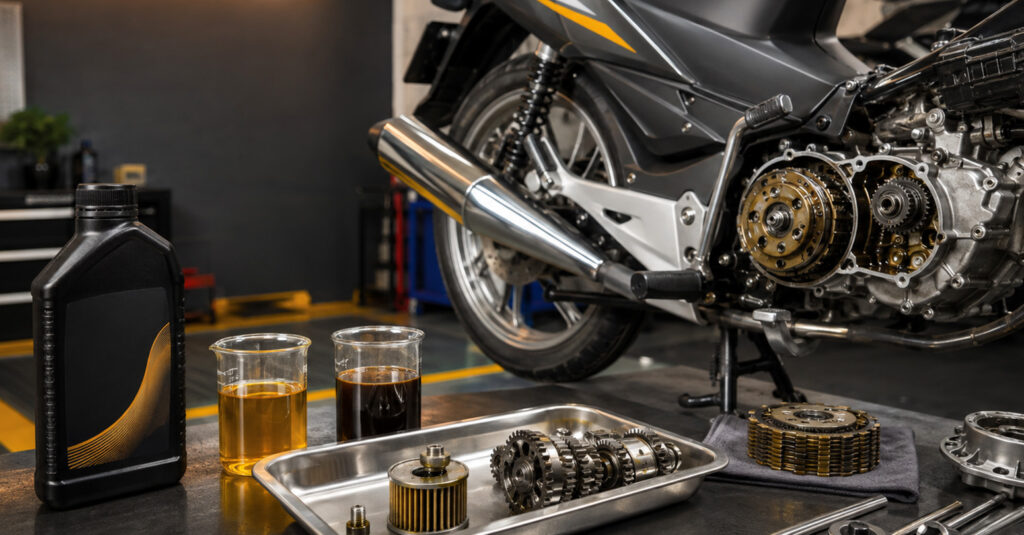
A supplemental additive poured into engine oil to extend or enhance its protection is what this type of product does. In a motorbike, it reinforces base oil performance across engine components, gearbox internals, and clutch plates. The treatment must not reduce clutch friction. Most bikes use a wet clutch that relies on controlled friction between oil-bathed plates. Any additive that reduces the friction coefficient at the clutch surface affects power transfer and clutch feel.
Why Motorbike Engine Treatment Is Different From Car Additives
A car engine’s oil doesn’t touch the clutch. The transmission uses its own fluid. So a car engine additive can include friction modifiers that lower internal engine friction without affecting any clutch system.
SAE research confirms that motorcycle operating conditions are considerably more severe than those of a typical passenger car. The oil must handle wet clutch lubrication, gearbox lubrication, and higher temperatures and power densities than car engines face.
On a four-stroke motorbike with a wet clutch, the same oil lubricates all three systems. A friction modifier that reduces metal-to-metal friction in the engine also reduces friction at the clutch plates. The JASO T 903 standard exists because car oils with friction modifiers caused clutch slippage in bikes. JASO MA and MA2 ratings require a high enough friction coefficient at the clutch. JASO MB allows lower friction and suits dry clutch applications only.
The practical implication is that riders shouldn’t transfer habits from car maintenance directly to their bike. An additive that’s been working well in a car engine will cause clutch problems in most four-stroke bikes. The check is to look at the JASO rating on the oil currently in the bike. Then confirm that any treatment is compatible with that rating before adding it.
Any engine treatment added to a motorbike’s oil must be checked against the bike’s JASO oil rating. Adding a friction-reduction additive to a wet-clutch bike without checking this first is the most common treatment mistake riders make.
Some riders don’t notice the problem until the clutch starts slipping under load. At that point, the friction modifiers have already reduced the coefficient at the clutch surface. A fresh oil change without the problematic additive typically resolves it. Avoiding the situation is simpler than correcting it.
For scooters, the situation differs slightly. Many scooters have a CVT transmission that doesn’t share oil with the engine crankcase. In those applications, the engine oil only lubricates the engine itself. Friction modifier compatibility is less of an issue for the engine oil in this setup. The CVT system has its own separate fluid requirements.
Motorbike Engine Care Beyond the Oil
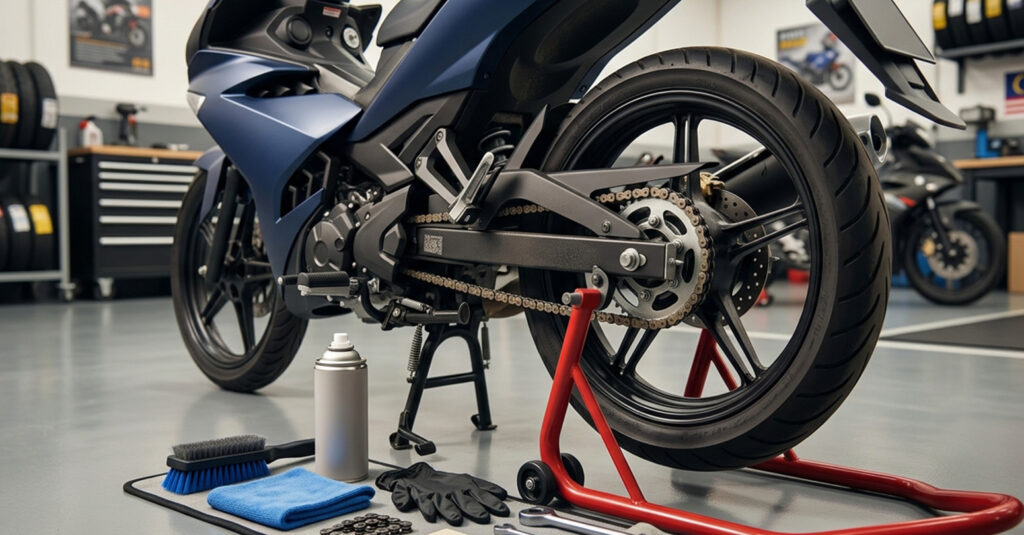
Good motorbike engine care extends beyond the oil in the sump. The drivetrain, chain, and mechanical surfaces all require specific maintenance that the engine oil doesn’t cover. Neglecting these areas while maintaining perfect oil change intervals still leaves real gaps in the overall maintenance picture.
Chain lubrication is one of the most neglected maintenance areas on daily-use bikes. A dry or contaminated chain transfers power inefficiently, wears sprockets faster, and in some riding conditions can snap without warning. Estremo’s Chain X is formulated with Moly-based friction modifiers and premium anti-wear additives. It’s compatible with O-Ring, X-Ring, and Z-Ring chain types. Spray onto the chain and allow 3 minutes to dry before riding.
Most riders check oil but forget the chain until they hear it. A chain running dry for several hundred kilometres wears plates and rollers faster than it should. The lubrication interval depends on conditions. Wet or dusty environments call for more frequent application. Highway riding in dry conditions allows longer gaps. Checking the chain before each long ride takes under a minute.
Consistent chain lubrication is one of the highest-return maintenance habits on a motorbike. A well-lubricated chain on a 100cc to 250cc commuter can extend chain and sprocket life significantly compared to an unlubricated one under the same riding conditions.
For engine rebuilds, Estremo’s Lube X is a synthetic assembly lube. It protects engine surfaces during the period before oil pressure builds on the first start. Apply directly to bearings, pistons, rings, and cam lobes before assembly. This is a specialist care product rather than a daily additive. It matters whenever cylinder or top-end work is done.
What Engine Treatment Should You Avoid on a Motorbike?
Car engine additives listing friction modifiers or ACEA A/B classification should not be used in most wet-clutch motorbikes. These formulations reduce friction across the board, including at the clutch plates. The result is reduced clutch grip, softer engagement, and in some cases progressive clutch slippage under load.
The check is simple. If the oil the additive targets carries an ACEA A or B rating, it’s a car engine product. Motorbike-specific oils carry JASO MA, MA1, or MA2 ratings. Any supplemental additive should be checked for compatibility with JASO MA-rated oils before use in a wet-clutch motorbike.
This check matters because some additives marketed as general-use engine protection products are formulated primarily for car engines. They may not list clutch compatibility at all. When in doubt, use a product that explicitly states compatibility with motorcycle oils or JASO MA classifications. Products built specifically for bike applications are the safer starting point.
For scooters with CVT transmissions and dry clutches, the restriction is less strict for engine oil additives specifically. The CVT fluid still requires its own maintenance using a CVT-specific product rather than an engine oil additive.
Frequently Asked Questions

1. Can I use a car engine oil treatment in my motorbike?
Not without checking. Car engine treatments with friction modifiers reduce clutch friction in wet-clutch motorcycles. This causes slipping, softer engagement, and reduced power transfer. Only use an engine oil treatment that’s confirmed compatible with JASO MA-rated motorcycle oils.
2. What does a supplemental additive do for a motorbike engine?
It adds a supplemental protective layer on top of what the base oil provides. In a motorbike, this means additional wear protection on piston surfaces, cylinder walls, gearbox internals, and bearing surfaces. The treatment slows wear on components running at high RPM and temperature between oil changes.
3. Do I need a different treatment for two-stroke and four-stroke engines?
Yes. Two-stroke engines use fuel-mixed or injection-fed oil and don’t have a separate sump. Supplemental additive products added to a separate oil sump don’t apply to two-stroke systems. The lubrication in a two-stroke engine is managed entirely by the two-stroke oil itself. Use a quality two-stroke oil designed for the application. Estremo’s HeatPro 2T is a dedicated two-stroke oil covering the lubrication and protection requirements for this engine type.
4. How often should I lubricate a motorbike chain?
Chain lubrication frequency depends on riding conditions. Daily commuting in wet or dusty environments may call for lubrication every 300 to 500 km. Drier highway riding allows longer intervals. Check the chain condition at each fuel stop as part of standard motorbike engine care. Apply chain lube to a warm chain for better penetration.
5. How do I know when to switch from mineral to semi-synthetic or fully synthetic oil for my bike?
The main signals are higher mileage, more demanding riding conditions, or a longer preferred service interval. Mineral oil suits lower-displacement commuter bikes on strict short-change schedules. Semi-synthetic handles sustained heat better and suits bikes above 150cc or those ridden daily in heavy traffic. Fully synthetic is the right choice for performance bikes, high-RPM engines, and riders who want to extend the drain interval. If the bike is already above 80,000 km and still on mineral oil, moving to semi-synthetic with a pre-change flush is worth considering.
Conclusion
Choosing the right treatment for a motorbike is a narrower decision than for a car. The shared lubrication of the engine, gearbox, and wet clutch means that any additive affects all three simultaneously. It degrades clutch performance gradually until grip is clearly reduced under load. The right product, confirmed against the bike’s JASO oil rating, adds genuine wear protection without affecting clutch function. Consistency matters as much as product selection. Using the right treatment at every oil change maintains the protective layer on engine components. It keeps the drivetrain working within its intended operating range. Explore Estremo’s full motorcycle oil and care range. The range covers lubricants, chain care, and protection products for two-stroke and four-stroke bikes.