
Key Takeaways
- An engine oil additive supplements what the base oil does. In an older engine, it targets gaps that standard oil can’t fully address.
- Three conditions benefit most: high mileage with widened clearances, sludge from irregular servicing, and elevated oil consumption from worn piston rings.
- A supplemental additive adds a protective layer on worn surfaces. It doesn’t reverse wear, but it slows the rate of further damage.
- A pre-drain cleaning product removes deposits before an oil change. Fresh oil in a dirty engine doesn’t start clean.
- Matching the product to the actual condition matters. Wear protection, deposit cleaning, and friction reduction are different functions requiring different products.
Introduction
An older car with 100,000 km on the clock doesn’t always run worse than a newer one. But the engine has changed internally. Clearances between pistons and cylinder walls are wider. Oil consumption may have crept up. If the service history has any gaps, sludge has likely accumulated in oil galleries and around the valve train. These are quiet changes. None of them triggers a warning light. But they all affect how well the engine is being lubricated at any given service interval. The engine may feel fine from behind the wheel. Internally, the conditions have already shifted.
This is where an engine oil additive becomes worth considering. Not as a fix for mechanical failure. As a way to extend engine life. The engine still runs well. But it’s no longer in the internal condition it was when new.
This guide covers which engine conditions respond well to additive use. It covers what each type does, which Estremo products suit each situation, and how to use them correctly.
What Is an Engine Oil Additive?

A supplemental additive is a concentrated compound added to engine oil to extend its protection. Modern engine oil already contains an additive package covering detergency, anti-wear, oxidation resistance, and viscosity stability. A supplemental additive builds on that package. It adds extra wear protection for worn surfaces, friction reduction via a different chemical mechanism, or enhanced cleaning of deposits. It works alongside the base oil, targeting gaps that grow more relevant as the engine ages.
The key distinction is between the additive package already present in the oil and a supplemental product added separately. Every modern engine oil comes with an additive package blended into the formulation at the refinery. That package is calibrated for a typical engine in typical condition. Standard formulations don’t account for widened clearances, accumulated sludge, or depleted additive protection from an extended drain interval. A supplemental additive addresses those specific gaps.
Why Older Engines Create Different Lubrication Needs
An engine accumulates wear from its first start. Most of that wear happens in the first few hundred kilometres of bedding in. After that, wear proceeds slowly over the vehicle’s life. Piston ring and cylinder wall clearances widen. Valve stem seals become less effective. Bearing surfaces lose tight tolerances.
These changes happen gradually and without obvious symptoms in the early stages. A driver may not notice anything different until oil consumption rises above a hard-to-ignore threshold. Or until the car struggles at an emissions test. The engine is no longer burning fuel as efficiently as it should. By that point, the internal changes have been accumulating for some time.
SAE research found that aged engine oil produced significantly higher liner wear compared to fresh oil. The aged oil showed slightly lower friction. The liner wear increase was significant. This happens because the anti-wear additive package in engine oil depletes over its service life. An older engine running oil past its drain interval may get less protection than its viscosity grade suggests.
A supplemental engine oil treatment addresses this by reinforcing the protective film on worn surfaces. It doesn’t reverse mechanical wear. What it does is slow further wear on surfaces that have lost some of their original precision. For an engine with genuine high mileage, that difference compounds over tens of thousands of kilometres of continued use.
An engine oil additive for an older car isn’t a repair product. It’s a lubrication strategy that accounts for the wider clearances, reduced compression, and deposit accumulation that come with age and mileage.
When Is an Engine Oil Additive Worth Using?
The benefit depends on what’s actually happening inside the engine. Three conditions stand out where additive use is worth the cost.
High mileage with increased oil consumption
An engine that burns or leaks oil at a noticeable rate has worn seals, worn piston rings, or both. Oil consumption in older engines typically increases as ring clearances widen and valve stem seals harden. An engine oil treatment with wear protection adds a nano-scale protective layer on those worn surfaces. It doesn’t seal the gaps mechanically. It reduces the friction and heat that accelerate further wear on those surfaces.
The benefit is gradual rather than immediate. Over several oil change cycles using a protection additive, the rate of wear on already-worn surfaces slows. The engine doesn’t recover its original tolerances. But the rate at which it continues to lose them decreases. For an engine with another 50,000 to 100,000 km of expected use, that gradual benefit is real. It accumulates over time in ways that become visible in reduced oil consumption and a more consistent engine feel.
Estremo’s Nano Engine Protector 1 is formulated for this condition. Its nano shield additive repairs and reconditions worn internal engine surfaces. Add 150ml per 4-5 litres of engine oil. Run the engine for 5-10 minutes after adding to circulate it before driving.
Sludge from irregular service intervals
An engine that has missed oil changes or run long mineral oil intervals accumulates sludge in oil galleries. The valve train and crankcase are typical accumulation points. Sludge restricts oil flow. It reduces protection to components that depend on consistent lubrication pressure. Adding fresh oil to a sludgy engine doesn’t clean it out. The sludge stays and mixes with each new fill.
The longer sludge stays in the engine, the harder it becomes to remove with a standard drain. The deposits harden and adhere to surfaces. A dedicated cleaning product is needed to loosen and suspend them before they can exit with the drain oil.
An engine cleaner is used before a drain removes these deposits first. Estremo’s Nano Oil Cleaner handles this step. Add 250ml to the existing engine oil before draining. Run the engine for 10-15 minutes to circulate the cleaner through the system. Then drain as normal and follow with a fresh oil change. This gives the new oil a clean system to work in. Read more about when to use one in the Estremo guide on engine flush and when to use it.
Switching from mineral to synthetic on a higher-mileage engine
Switching oil types on an older engine with significant sludge can dislodge deposits that have been sitting for years. Synthetic oil’s stronger detergency action is beneficial in a clean engine. In a dirty one, it can loosen deposits and send them through the oil system. The result is contaminated new oil within the first few hundred kilometres of the fresh change. Running an engine cleaner before the transition removes the existing deposits first. It prepares the engine for synthetic oil without the disruption of loosening old sludge mid-service.
The Right Product for the Right Condition
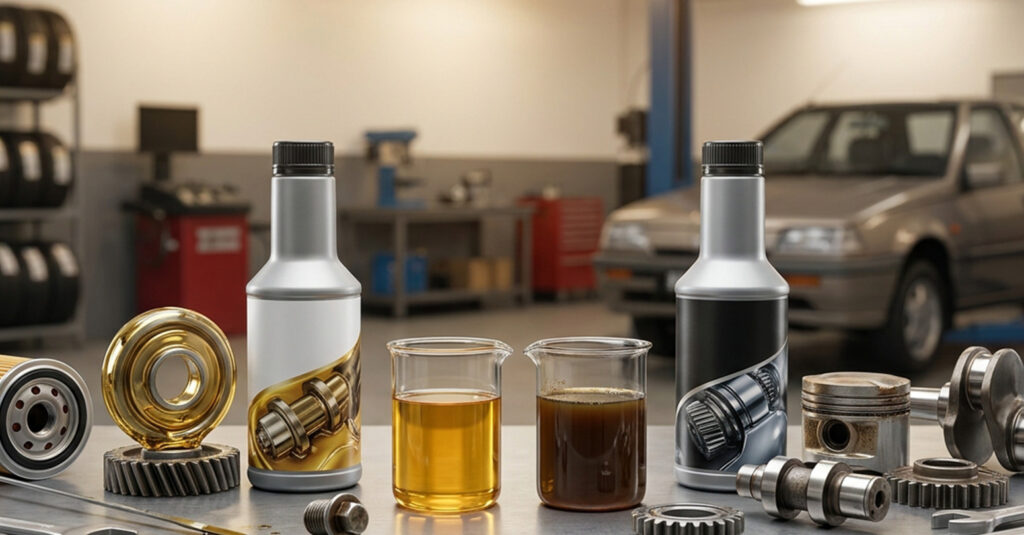
Not all additives serve the same purpose. Using the right product for the actual engine condition is more effective than a general approach.
Estremo’s Nano Oil Care is the standard wear protection additive for ongoing use. Add 250ml per 4-5 litres of engine oil at every oil change. It prevents metal-to-metal contact and minimises wear across all engine components. For higher-mileage engines that are still mechanically sound but showing early wear signs, this is the practical starting point.
Nano MoS2+ adds friction reduction on top of wear protection. Using Molybdenum disulfide nanoparticles combined with anti-wear additives, it delivers ultra-low friction and strong protection against wear. Add 250ml per 4 litres of engine oil. This suits engines running sustained high loads, and any situation where the standard additive package needs reinforcing.
Nano Engine Protector 1 is the targeted choice for reconditioning worn internal surfaces. It suits engines where compression has dropped noticeably, or where internal wear goes beyond what a standard additive can address.
Stacking multiple additives without understanding what each does creates no additional benefit. It can dilute the base oil’s properties. One product matched to the actual condition is more effective than several used at once.
A practical rule of thumb: start with Nano Oil Care for any higher-mileage engine as ongoing maintenance. Add Nano Oil Cleaner as a pre-drain treatment if the service history is unclear or overdue. Add Nano Engine Protector 1 if compression or oil consumption is a concern. Use Nano MoS2+ if the engine runs under sustained high load. These four products cover the full spectrum of conditions an older engine is likely to present.
Is a Supplemental Additive Worth It for Your Older Car?
For a reliable engine above 80,000 km, an oil treatment at each oil change is low-cost protection against accelerated wear. The per-service cost is modest. The benefit accumulates over tens of thousands of kilometres.
For an engine with a patchy service history, a pre-drain flush before the next change is worth the effort. Getting fresh oil into a clean system is more effective than any protection additive added to a contaminated base.
For higher oil consumption or reduced compression, Nano Engine Protector 1 targets the wear surfaces where those symptoms originate.
If none of these apply, a standard wear protection additive at each service is still a useful preventive measure. The benefit is lower on a well-maintained, lower-mileage engine. The cost is equally low.
The simplest guide: past 80,000 km and still in daily use, a protection additive at each oil change makes sense. If the service history has gaps, an engine cleaner before the next change makes sense. If the car is showing specific symptoms of internal wear, Nano Engine Protector 1 is the targeted response. These three don’t need to be used together. Each addresses a different condition. The most relevant one for the current engine state is the right starting point.
Frequently Asked Questions

1. What does an additive in the engine oil do for an older engine?
It supplements the protection provided by the base oil. In an older engine, it addresses gaps that come with age. These include wider clearances on worn surfaces, reduced compression from worn piston rings, and deposit buildup from previous service intervals. The right additive for the right condition slows further wear and supports consistent performance over continued use.
2. Can I use an engine oil treatment in any engine?
Most supplemental additives are compatible with mineral, semi-synthetic, and fully synthetic engine oils. Always check the product instructions for compatibility and dosage. The benefit is most noticeable in engines with genuine high mileage or a history of irregular servicing. For a newer, well-maintained engine, the additive package in the base oil is usually sufficient. Adding a supplemental product to a newer, clean engine adds cost but doesn’t cause harm.
3. How does a pre-drain flush product work?
Add it to the existing engine oil before a drain. The engine runs for 10-15 minutes, circulating the product through oil passages, valve train components, and the crankcase. It dissolves varnish and sludge, holding them in suspension. These are then removed with the drain. Fresh oil goes into a clean system rather than mixing with existing contamination.
4. Is there a risk in flushing a very old engine before an oil change?
A strong flushing treatment can loosen deposits acting as informal seals in very high-mileage engines with unknown service history. In those cases, a mild approach is more appropriate. Use a standard wear protection additive rather than an aggressive flush. For engines with a known service history, a pre-drain cleaner before each drain is standard maintenance, not a risk. The key variable is whether the engine’s internal condition is known or unknown.
5. How often should I use supplemental engine additives?
Nano Oil Care and Nano MoS2+ are used at every oil change, added with each fresh fill. Nano Engine Protector 1 is also used at each oil change for ongoing reconditioning of worn surfaces. Nano Oil Cleaner is a pre-change treatment used before each drain. Following the dosage instructions on each product keeps the additive concentration within the effective and safe range.
Conclusion
An older engine that still runs well is worth maintaining properly. Clearances have widened. The anti-wear additive package in the base oil depletes between services. The risk from any past service gaps accumulates over time. A supplemental additive doesn’t fix mechanical wear. What it does is slow further wear, keep internal surfaces cleaner, and reduce the friction that accelerates deterioration. The right product, matched to the actual condition, extends working life. The cost is far lower than engine repair or replacement. Explore the Estremo additive range to find the right product for your engine’s mileage and service history.