Key Takeaway
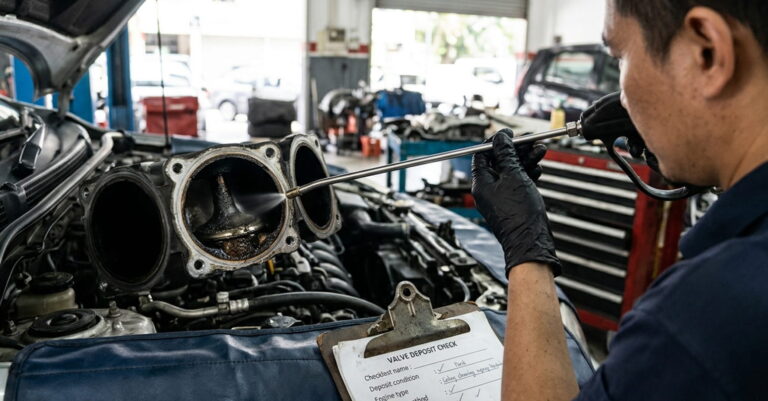
- Engine cleaner is a fuel or oil additive that dissolves carbon deposits and sludge built up inside the engine over time. In older cars, that buildup can cause noticeable power loss.
- Carbon deposits form on injector nozzles, intake valves, piston rings, and combustion chamber walls. Each location causes a different symptom, but they all make the engine feel weaker and less efficient.
- A fuel system cleaner targets injectors and intake valves by working through the fuel tank. An oil system cleaner targets piston rings and internal engine surfaces by working through the oil.
- Engine cleaner works best as a maintenance step at regular intervals. Waiting until power loss becomes obvious means deposits have already been building for some time.
- It will not fix mechanical wear, sensor faults, or compression loss from physical damage. But if the engine has been skipping regular cleaning, it is a sensible first step before investigating further.
Introduction
Slow power loss on an older car is one of those problems that creeps up. The car still starts, it still drives, but it takes more effort to pull away, and the engine just does not feel as responsive as it used to. Before you assume it’s something expensive, there’s a cause worth checking first: carbon deposits.
Carbon builds up gradually inside every engine. It settles on injector nozzles, intake valves, and piston rings, and coats the combustion chamber walls. Over time, that buildup changes how efficiently fuel burns, which is exactly what you feel as reduced power and slower response. Engine cleaner is designed to dissolve it.
Whether it will help depends on where the deposits are and how long they have been there.
Where Carbon Deposits Build Up and What They Do
Injector Nozzles
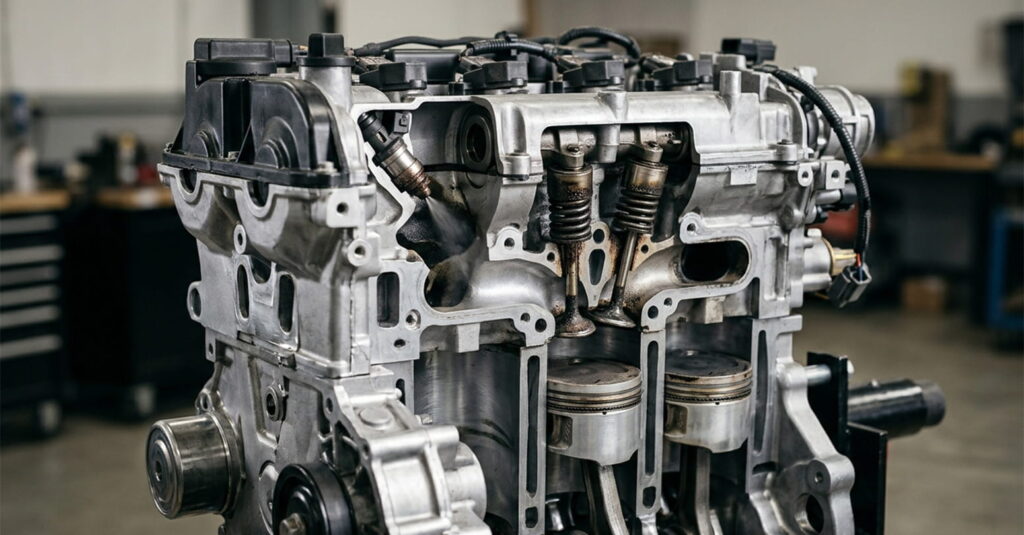
Fuel injectors spray petrol into the engine in a precisely shaped mist. When carbon builds up on the nozzle tip, that spray pattern distorts. Instead of a fine mist, fuel enters as an uneven stream that does not atomise or burn as completely. So the engine loses power and uses more fuel, with no mechanical part breaking.
Intake Valves
In port-injection engines, petrol washes the intake valves as it enters the cylinder, which keeps them relatively clean over time. Direct-injection engines skip that step. Fuel goes straight into the cylinder, so the valves never get that wash. Oil vapour from the crankcase ventilation system coats the valve stems instead, and carbon builds up around the valve necks over time. Carbon buildup on intake valves causes rough idling, misfires, and power loss in direct-injection engines past the three-year or 50,000-kilometre mark.
Piston Rings
Piston rings seal the combustion chamber. When carbon deposits form around them, the rings can stick or lose flexibility, reducing the compression seal. Poor compression means the engine makes less power. It also increases oil consumption because a poorly sealed ring allows more oil vapour into the combustion chamber.
Combustion Chamber Walls
Carbon on the combustion chamber walls shrinks the space where fuel burns. It reduces effective volume slightly and creates hot spots that can trigger pre-ignition, where fuel ignites before the spark plug fires, producing knock and reducing efficiency.
Carbon deposits do not announce themselves with a single dramatic symptom. They accumulate gradually and show up as a slow drift toward rougher running, harder starting, and less responsive acceleration.
How Engine Cleaner Works
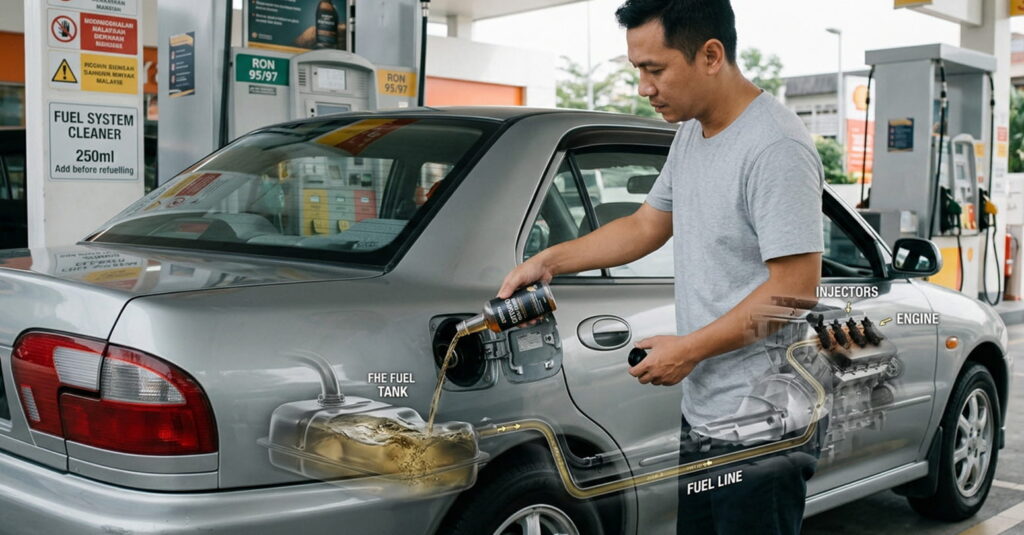
Engine cleaner comes in two types, and each addresses different deposit locations. Here is how they compare:
| Fuel System Cleaner | Oil System Cleaner | |
| Added to | Fuel tank | Engine oil before a change |
| Targets | Injector nozzles, fuel lines, intake valves | Piston rings, oil passages, internal surfaces |
| How long | Circulates as you drive | Run engine 10–15 min, then drain |
| Frequency | Every 5,000km | At every oil change |
Fuel System Cleaner
Add one 250ml bottle of Estremo’s Nano Fuel Cleaner directly to the fuel tank before filling up with petrol. As the engine runs, the cleaner circulates through the fuel lines, past the injectors, and through the intake system. The nano additives dissolve varnish and carbon deposits from the fuel system, clean injector nozzles, and help free residue-coated valves. The formula also forms a nano shield layer inside the fuel system to reduce wear between moving parts.
For ongoing prevention, use it every 5,000km. An older car being cleaned for the first time may take a couple of fill-ups before any improvement becomes noticeable.
Oil System Cleaner
Add Estremo’s Nano Oil Cleaner to the existing engine oil before a change. Run the engine for 10 to 15 minutes, then drain the oil as normal. The cleaner loosens sludge and carbon deposits from inside the engine, frees stiff piston rings, neutralises corrosive acids that accumulate in aged oil, and clears internal passages. It works with both petrol and diesel engines and is compatible with mineral and synthetic oils.
Using both cleaners together covers deposits across the entire engine rather than one section at a time. If you want more background on how an engine flush works and when to use one, the Estremo guide on engine flush timing covers the process in detail.
Engine cleaner at regular intervals is maintenance, not a repair. Using it early keeps deposits from accumulating to the point where they affect driving directly.
What Engine Cleaner Cannot Fix?
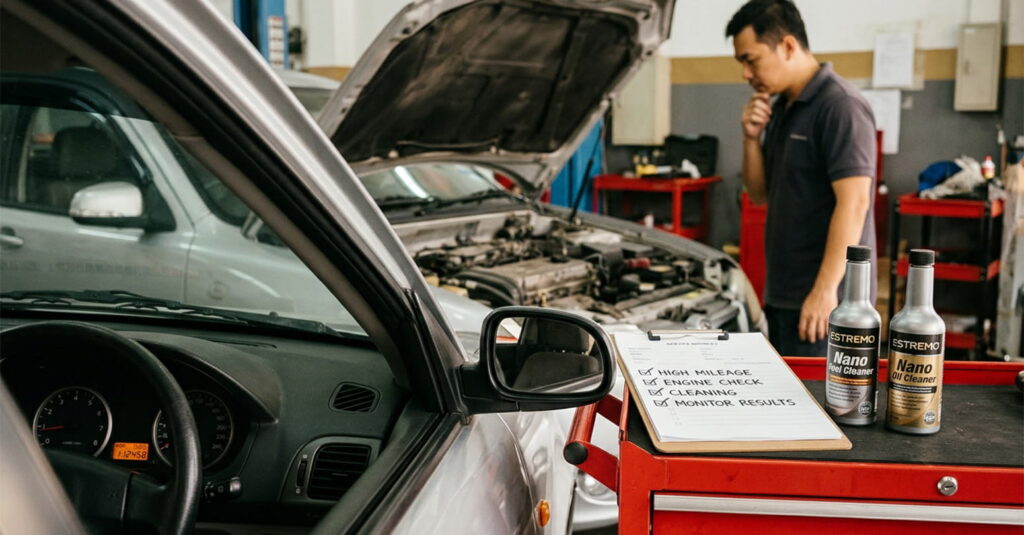
Engine cleaner works best when the problem is chemical: deposits, varnish, and sludge that have built up from normal use. It won’t touch:
- Mechanical wear on piston rings where the metal itself has worn down from high mileage
- Sensor faults from a faulty oxygen sensor, MAF sensor, or crank position sensor
- Vacuum leaks from cracked hoses or a split intake manifold gasket
- Ignition system problems from worn spark plugs or failing coil packs
- Timing issues from a stretched timing chain or worn tensioner
If your engine still runs rough or lacks power after a couple of cleaning cycles, a workshop diagnostic is the right next step. Engine cleaner is a sensible early move, not the only one.
Is Engine Cleaner Worth It on a High-Mileage Car?
On a car with more than 80,000 to 100,000 kilometres that has had stretched service intervals, engine cleaner is one of the lower-cost steps worth taking before spending money on something more serious. Carbon deposits build faster when oil changes are delayed or when the car has done mostly short trips.
The cost of one bottle of Nano Fuel Cleaner or Nano Oil Cleaner is a fraction of a workshop diagnostic fee. If deposits are part of the problem, you may notice the car picks up better and idles more smoothly within a tank or two. When nothing changes after a few cycles, you have at least ruled out one cause cleanly and cheaply. If the engine also burns more oil than it used to, Estremo’s guide on oil additives for older engines covers what helps and what does not.
For more on how injector condition relates to engine response, the Estremo article on fuel injector cleaner and fuel economy explains what injector deposits do to your fuel bill.
Does Power Loss Always Mean Carbon Deposits?
Power loss in older cars has several possible causes. Carbon deposits are a recognised cause of gradual power loss in older, higher-mileage cars, particularly those with direct-injection engines or a history of missed services. But other causes exist, including ignition wear, compression loss from mechanical damage, and engine management issues. It’s worth trying first: it costs very little, it’s safe for the engine, and it rules out one of the real possibilities. If symptoms persist after a few cleaning cycles, a full diagnostic helps identify what remains.
Frequently Asked Questions
1. Can engine cleaner restore lost power in an older car?
It can, if the power loss is caused by carbon deposits on injectors, intake valves, or piston rings. Carbon deposit buildup is a known issue in high-mileage cars that have had skipped services. If deposits are the cause, using engine cleaner after a few uses should show gradual improvement. Power lost to mechanical wear or electrical faults is a different problem that engine cleaner will not fix.
2. How do I know if carbon deposits are behind my car’s power loss?
The pattern to look for develops gradually: rougher idling, harder cold starts, slightly higher fuel consumption, and reduced throttle response. These signs overlap with other causes, which is why engine cleaner is worth trying first. If the symptoms persist after two to three cleaning cycles, a workshop diagnostic is the next step.
3. What is the difference between a fuel system cleaner and an oil system cleaner?
A fuel system engine cleaner works through the fuel tank and targets injector nozzles, fuel lines, and intake valves. An oil system cleaner is added to the engine oil before a change and targets piston rings, internal engine surfaces, and oil passages. Both dissolve carbon deposits, but they reach different parts of the engine. Using both together cleans more of the engine than either one on its own.
4. How often should I use engine cleaner on an older car?
Estremo’s Nano Fuel Cleaner works every 5,000km, added to the fuel tank at fill-up. The Nano Oil Cleaner is used at every oil change interval. For a car that has missed services, starting both at the same time gives the broadest initial clean. For a neglected engine, here is what to do: run both engine cleaners together on the first cycle, then keep to the recommended intervals from there.
5. Are there any risks to using engine cleaner in an older engine?
For a well-maintained engine, using a quality engine cleaner carries low risk. In engines with very heavy buildup, the loosened sludge can clog the oil filter. Change the oil and filter promptly after using an oil system cleaner; it’s good practice regardless of engine age.
Power loss in an older car is not always caused by something expensive or hard to fix. If carbon deposits are behind it, engine cleaner is one of the cheaper fixes you can try before paying for a diagnostic. Estremo’s Nano Fuel Cleaner and Nano Oil Cleaner are designed to work together: one through the fuel system, one through the engine internals, to tackle deposits from both directions. A Nano Fuel Cleaner at the next fill-up and a Nano Oil Cleaner at the next service give the engine a full clean in one go. Browse the full Estremo additives range to find the right option for your car.