Key Takeaway
- Car lubricant performance changes based on the weather and traffic you drive through, not just how many kilometres you’ve covered.
- Malaysia’s year-round heat means engine oil operates at the top of its thermal range on almost every drive, accelerating degradation faster than standard service intervals account for.
- Stop-and-go city traffic causes a separate problem from heat. The engine never warms up fully, so moisture and fuel residue stay in the oil and build into sludge.
- High ambient humidity introduces moisture that forms acidic compounds in the oil over time, wearing down additives and attacking metal surfaces.
- Malaysia’s monsoon seasons add short-burst driving and road flooding to the mix, creating additional oil contamination risks that go unnoticed.
Introduction
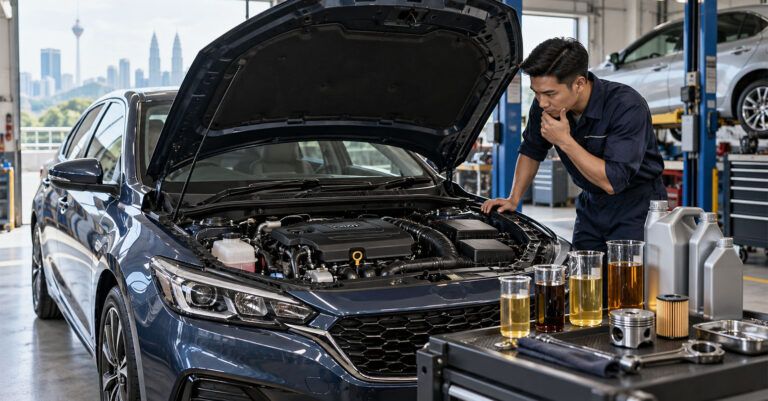
Engine oil doesn’t experience the same conditions everywhere. A car driving through Kuala Lumpur in July is dealing with very different stresses on its oil than one doing motorway miles in a mild climate. Heat is higher. Humidity is constant. Traffic stops and starts more. Monsoon seasons bring flooding and moisture in ways cooler markets simply don’t face.
None of these conditions stop engine oil from working. They do change how quickly it degrades, how it gets contaminated, and what kind of oil holds up best. This article is specifically about what Malaysia’s climate means for car lubricant performance in practice.
How Malaysia’s Heat Specifically Affects Car Lubricant Performance
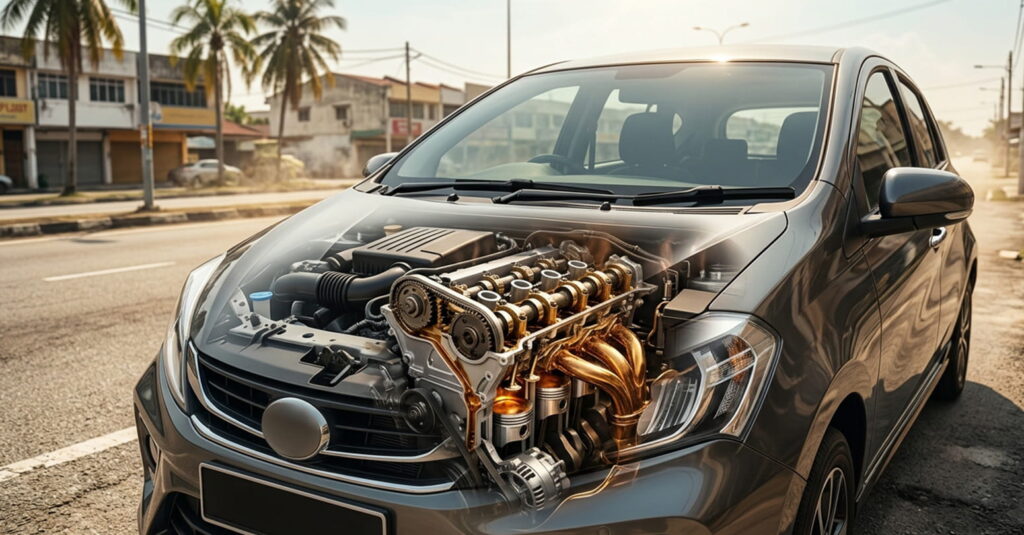
The relationship between heat and oil thinning is well understood. What matters for Malaysian drivers is that year-round high temperatures mean oil operates in the upper end of its thermal range on nearly every drive, rather than occasionally.
That sustained exposure changes two things. First, the protective oil film thins more consistently than it would in a cooler climate, putting slightly more stress on engine surfaces every single trip. Second, oxidation runs continuously rather than in seasonal spikes. An oil that might last five months in a temperate climate may degrade in three or four months under Malaysian ambient heat.
The grade your manufacturer recommends accounts for your engine’s operating range. However, it assumes a climate baseline that global manufacturers calibrate for a wide range of markets. Published vehicle maintenance guidance confirms that using the right oil grade and checking condition regularly are among the most practical steps for protecting engine health. In Malaysia’s conditions, checking oil condition more frequently than the standard interval is a practical response, not an overreaction.
Estremo’s HeatPro fully synthetic is formulated specifically for sustained tropical heat rather than the occasional high-heat spikes that standard synthetics are designed around.
Car lubricant performance degrades faster in Malaysia’s climate than standard service intervals designed for temperate markets account for. Checking oil condition between services is a practical habit here, not an overreaction.
What Stop-and-Go City Traffic Does to Engine Oil That Heat Alone Doesn’t
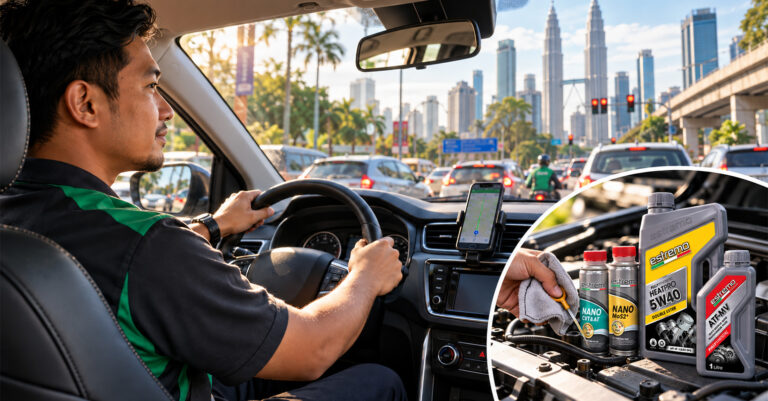
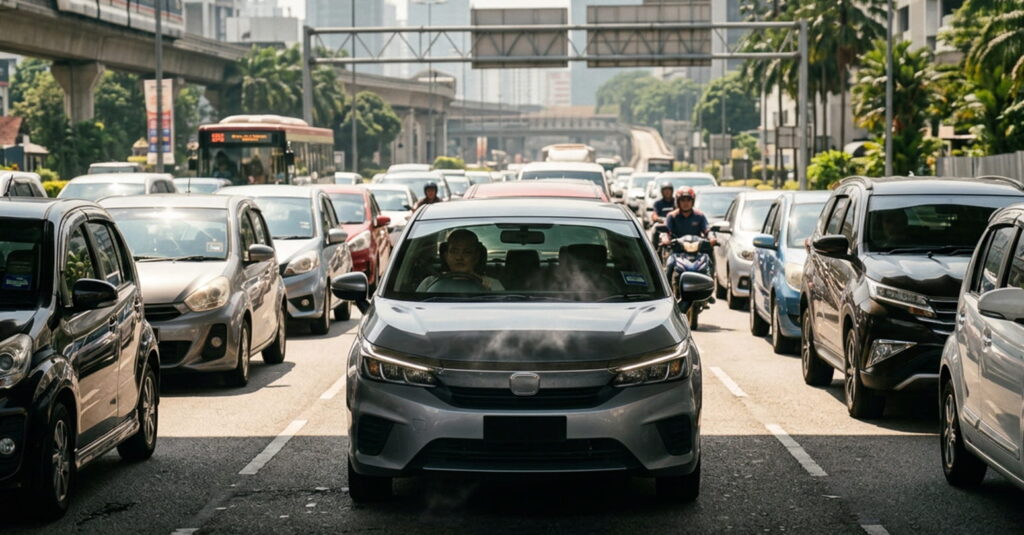
Heat degradation and city traffic contamination are two different problems. Oil breaks down chemically from sustained heat. City traffic contaminates oil through a separate mechanism: the engine never fully warms up.
In stop-go KL traffic, the engine repeatedly starts, idles, and stops without reaching its optimal operating temperature for long enough. Fuel vapour and condensation that would otherwise burn off simply stay in the oil. Over time, those contaminants accumulate and form sludge.
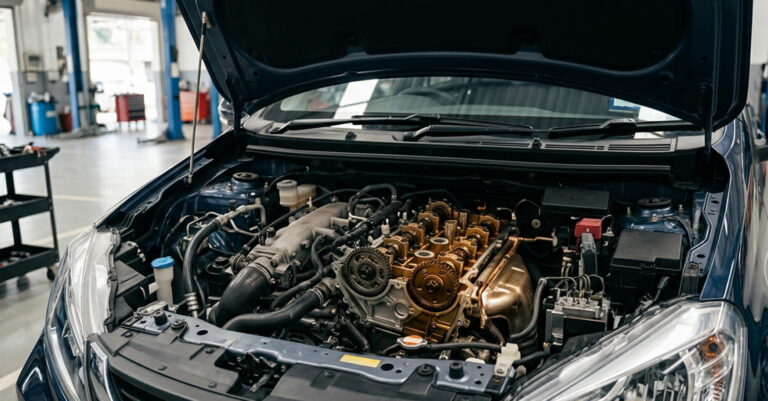
Sludge doesn’t announce itself. It gradually coats internal surfaces, restricts oil flow through narrow passages, and reduces engine oil performance without giving you a visible warning until damage is well underway. Short daily commutes repeated over months create exactly the right conditions for this to happen.
The practical response has two parts. First, use an oil with a strong detergent additive package that holds contaminants in suspension for longer. Second, consider shortening the change interval if urban driving makes up most of your routine. Estremo’s Nano Oil Care adds an anti-wear layer on metal surfaces, maintaining lubricant protection during the cold-start window before the oil reaches its proper operating temperature.
For daily urban commuting, Estremo SynGlide is formulated to resist sludge and keep lubrication stable through long idling periods with the air-conditioning on. HeatPro remains the choice where engine temperatures run highest. E-hailing drivers spend the most hours in this kind of traffic, and Estremo’s guide to engine oil for Grab drivers covers what that routine demands.
Stop-and-go traffic and sustained heat degrade engine oil through completely different mechanisms. The oil that handles one well doesn’t automatically handle the other.
How Humidity Degrades Lubricant Protection Over Time
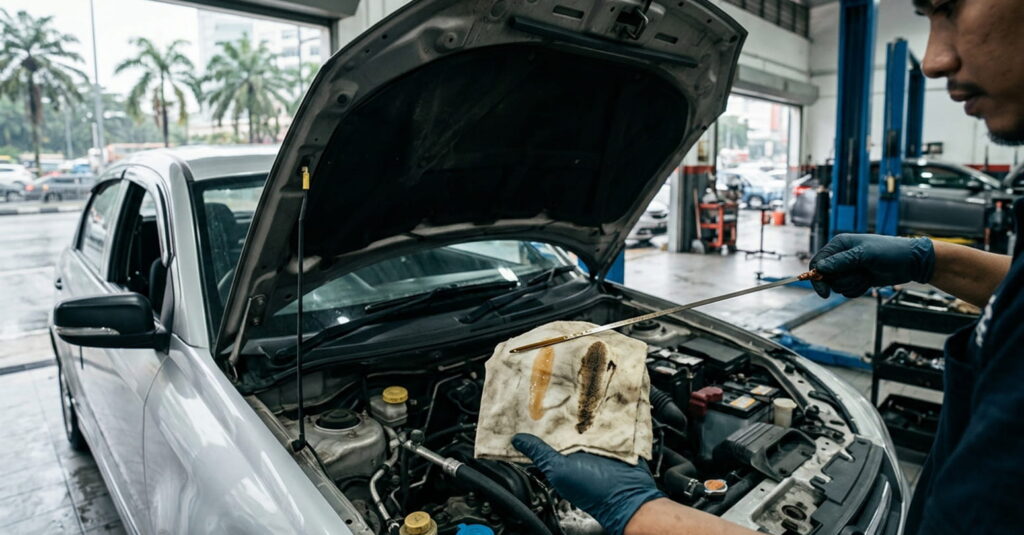
Malaysia’s ambient humidity introduces moisture into the engine through condensation and the ventilation system. When that moisture mixes with the oil, acidic compounds form. Those acids deplete the additive package that keeps the oil effective and gradually attack the internal metal surfaces of the engine.
Moisture in the oil also reduces its ability to hold other contaminants in suspension, which compounds the sludge risk from city traffic. The two effects reinforce each other quietly, without a dramatic warning sign, until the oil is well past its useful life.
One visible signal to watch for: milky or frothy oil on the dipstick. That indicates water has mixed in at a significant level. Change the oil immediately and look for the source. Waiting for that signal means the oil has already been degraded for some time. Checking oil condition regularly gives you a more accurate read on what’s actually happening inside the engine than waiting for the service light.
What the Monsoon Season Adds to the Picture
Most conversations about engine oil and weather stop at heat and humidity. For Malaysian drivers, the monsoon seasons add a separate layer of considerations that are easy to overlook.
Short Driving Bursts in Heavy Rain
When heavy rain slows traffic or forces drivers to pull over, trips that would normally be long enough to warm the engine up become brief, stop-start events. This compounds the city traffic contamination problem: more cold starts, less time at operating temperature, and more moisture staying in the oil.
Flooded Roads and Water Ingestion Risk
Driving through flooded roads can force water through the air intake or into the engine bay. Water reaching the engine oil causes rapid contamination. If you’ve driven through significant flooding, checking the oil shortly after is worth doing regardless of your service interval.
Post-Rain Moisture in the Engine Bay
After heavy rain, moisture sits in the engine bay longer than in dry conditions. It contributes to the ambient moisture environment the engine operates in. This is particularly relevant for vehicles parked outdoors overnight.
None of these individually justify an early oil change on their own. Together, the monsoon period is a practical time to check oil condition more closely than usual.
Does Weather Change How Often You Should Change Your Oil?
Yes. For Malaysian drivers specifically, standard service intervals underestimate the cumulative stress that heat, humidity, city traffic, and seasonal monsoon conditions put on engine oil. That interval is calculated for average conditions across many markets and climates. Malaysia’s environment pushes oil harder than that average assumes.
A practical approach: treat the manufacturer’s interval as the ceiling, not the target. Check oil condition at the halfway point. Dark or gritty oil means it’s time for a change. Clear, normal-looking oil can likely run to the full interval. Using a higher-quality synthetic formulation gives more margin before the oil degrades past its useful life, but doesn’t replace the habit of checking.
Estremo’s engine flush guide explains when running a flush before a fresh oil fill is worth doing, particularly for engines that have been operating under urban driving conditions for extended periods.
Frequently Asked Questions
1. Does Malaysia’s climate affect car lubricant performance more than in a temperate country?
Yes. Year-round heat means oil operates at the top of its thermal range on nearly every drive rather than occasionally. Oxidation and protective film thinning run continuously rather than seasonally. Standard service intervals calibrated for temperate markets underestimate how quickly car lubricant performance drops here, so checking oil condition more frequently is practical.
2. Why does city traffic cause different problems than highway driving?
Highway driving keeps the engine at a stable temperature long enough for moisture and fuel vapour to burn off the oil. Stop-and-go city traffic doesn’t. The engine never fully warms up between cold starts, so those contaminants stay in the oil and build into sludge. Heat degrades oil chemically; city traffic degrades it through contamination. In Malaysian traffic, both happen at the same time.
3. How does humidity affect engine oil performance?
Moisture from Malaysia’s high ambient humidity enters the engine through condensation and ventilation. When it mixes with oil, acidic compounds form that wear down the additive package and attack metal surfaces. It also reduces the oil’s ability to hold other contaminants in suspension. Engine oil performance declines gradually without obvious warning signs until the oil is well past useful.
4. What should I do after driving through a flooded road?
Check the oil sooner than your normal interval. Significant water ingestion from flooded roads can reach the engine oil and cause rapid contamination. Milky or frothy oil on the dipstick means change it immediately. Normal-looking oil should still be monitored over the following days rather than assumed to be fine.
5. What oil grade suits Malaysia’s heat and humidity best?
Use your manufacturer’s specification as the baseline. For passenger cars in Malaysia, a fully synthetic 5W-40 provides better lubricant protection under sustained heat and stop-and-go conditions than a 5W-30 or semi-synthetic. The second number in the grade tells you how well the oil holds its thickness at high operating temperatures. In Malaysia’s climate, that number matters more than the cold-start figure.
Malaysia’s climate puts a specific set of demands on engine oil that standard advice from temperate markets doesn’t fully address. Sustained heat, stop-and-go traffic, ambient humidity, and the monsoon seasons each degrade oil through different mechanisms. Knowing which factors your daily routine is most exposed to lets you match your oil grade and change interval to your actual situation. That’s how car lubricant performance stays where it needs to be between services, rather than following a global average that wasn’t built for Southeast Asian roads. Estremo’s HeatPro range is built for exactly these conditions. Browse the full range to find the right grade for your engine.