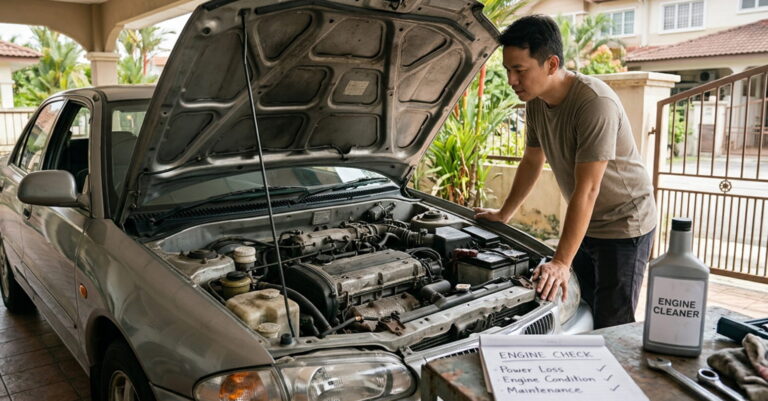
Key Takeaway
- A valve cleaner is an additive that dissolves the carbon crust on intake valves. These valves sit in a part of the engine where fuel never passes through, so there is nothing to rinse them clean on its own.
- If your car idles rough on cold starts but settles down once warm, the intake valves are the right place to investigate first. That pattern is specific to direct-injection engines where fuel bypasses the valves entirely.
- A valve cleaner works on the intake side of the engine only. Combustion chamber walls, injector nozzles, and piston rings each need a separate approach.
- A fuel system additive used every 5,000 km stops deposits from hardening before they cause problems.
- For engines with years of buildup, a fuel additive alone may not be enough. At that stage, a workshop can deliver cleaner directly through the intake, or physically clean the valves by blasting them with walnut shell media.
Introduction
Your car starts rough on cold mornings. Once it warms up, the problem disappears. You check the battery, the spark plugs, maybe the injectors. Nothing comes back. The part that rarely gets flagged is the intake valve stem, a small section of metal sitting inside the engine where no fuel ever reaches, and that is exactly where a valve cleaner works.
In a direct-injection engine, petrol goes straight into the combustion chamber and never touches the intake valves. Oil vapour from the crankcase (the sealed base of the engine) and exhaust gas from the EGR system settle on those valve stems every time the engine runs. Without anything to rinse them, the residue bakes on and becomes a hard carbon layer that restricts how much air gets in.
Why Intake Valves Build Up Carbon Deposits
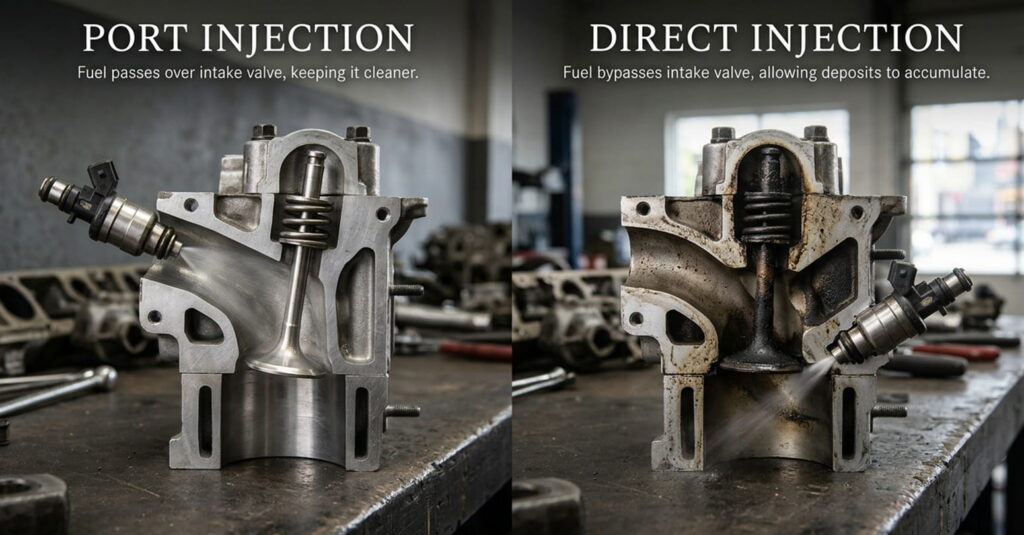
In a port-injected engine, petrol sprays into the intake port just before the valve, so the fuel stream acts as a continuous rinse. That rinse does not exist in a direct-injection engine. Fuel bypasses the intake valves entirely and enters the combustion chamber directly. The valves sit exposed to whatever the intake air carries: oil mist from the crankcase, exhaust particles from the EGR system, and heat from the combustion chamber right beside them. With no fuel to clean them, residue accumulates with every start.
Early direct-injection engines could develop drivability problems from valve deposits around the three-year or 30,000-mile mark. The timeline depends on how the car is used: short trips that never fully warm the engine accelerate the buildup, because the engine never gets hot enough to burn off the residue naturally.
Valve deposits are not caused by dirty fuel or poor injector maintenance. They form because of a structural difference in how direct-injection engines route fuel. That difference means fuel-only treatments rarely reach the valves.
If your engine is a direct-injection model, this is the mechanism behind the carbon you may find on the valves.
What Symptoms Point to Valve Deposits?
Valve deposits reduce the air entering the cylinder. Symptoms show up at low speed and on cold starts, when the engine needs precise airflow and has the least room to compensate.
If you notice any of these, the intake valves are worth checking first:
- A rough or uneven idle on cold starts that smooths out once the engine warms up
- Hesitation or a flat spot when pulling away from a standstill
- Occasional misfires, particularly on cold mornings
- A gradual drop in engine performance that is hard to pinpoint
- Lower fuel economy over time with no obvious cause
The clearest signal is a rough idle that settles once the engine warms. Cold starts need the most precise airflow, and carbon-coated valves disrupt that at exactly the wrong moment. GDI service records show this warm-up pattern is a reliable indicator of valve deposits, because the engine partly adjusts once it reaches normal temperature.
What a Valve Cleaner Can and Cannot Do
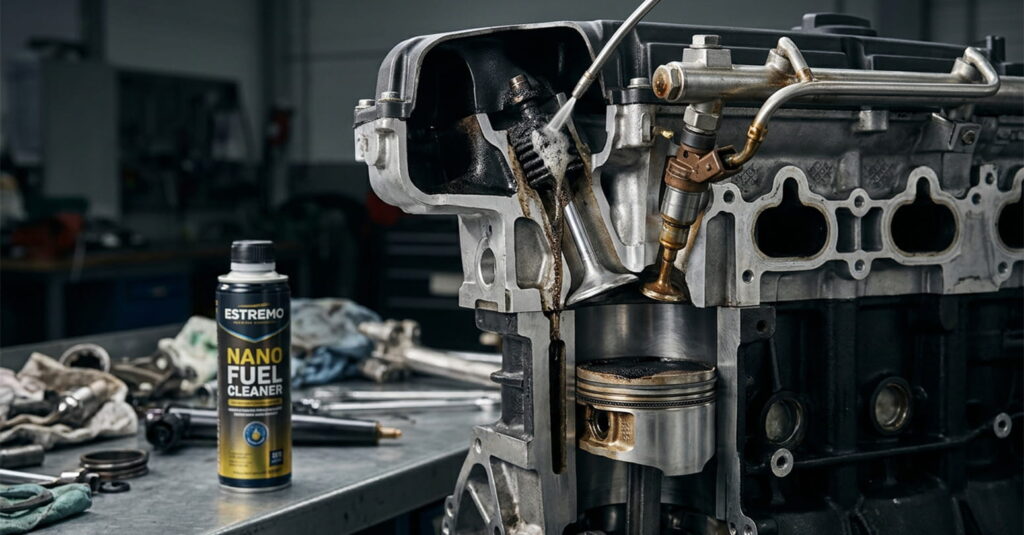
A valve cleaner softens and dissolves the carbon crust on the valve stems (the rods that open and close the port) and the narrow section below them, letting air flow freely again. Here is how it compares to other deposit treatments:
| Target | Valve Cleaner | Fuel System Cleaner | Oil System Cleaner |
| Intake valve deposits | Yes | Partial, depending on formulation | No |
| Injector nozzle deposits | No | Yes | No |
| Piston ring deposits | No | No | Yes |
| Combustion chamber walls | No | Partial | No |
If your engine has both valve deposits and injector fouling, you can cover both in one step with a fuel system additive formulated to clean from the intake valve through to the injectors. Estremo’s Nano Fuel Cleaner dissolves varnish and carbon deposits through the fuel system as the engine runs, covering the intake valve through to the injectors in one treatment.
A fuel system additive can reach the intake valves only when its formula is designed to travel that far. Check whether the product specifies intake valve cleaning alongside injector cleaning, not just the injector nozzles.
When Is a Dedicated Valve Cleaning Step Needed?
If deposits are still mild, a fuel system cleaner used regularly can slow the buildup and keep the valves cleaner. The key is starting before the deposits have had years to harden.
When deposits are already heavy, a chemical cleaner alone may not clear them. The signs at that stage are cold-start misfires, a persistent rough idle, or a drop in combustion efficiency. A workshop can deliver cleaner directly into the intake air stream past the throttle body using a pressurised process. For engines with heavy neglect, the intake manifold may need to come off. At that point, a workshop can physically clean the valves by blasting them with walnut shell media.
In direct-injection engines, significant symptoms can appear around the 50,000-kilometre mark, and earlier for cars driven mainly on short trips that never fully warm the engine. If your car fits that description and the intake valves have never been cleaned, starting there makes sense before looking at more involved repairs.
If cleaning cycles resolve the cold-start roughness but the engine still feels sluggish, oil-side sludge may be part of the picture. The Estremo guide on engine oil additives for older cars covers what to do when the oil system is contributing. For deposits across the rest of the engine (injectors, piston rings, combustion surfaces), the guide on what engine cleaner does in older cars covers those.
Does Valve Cleaner Improve Combustion Efficiency?
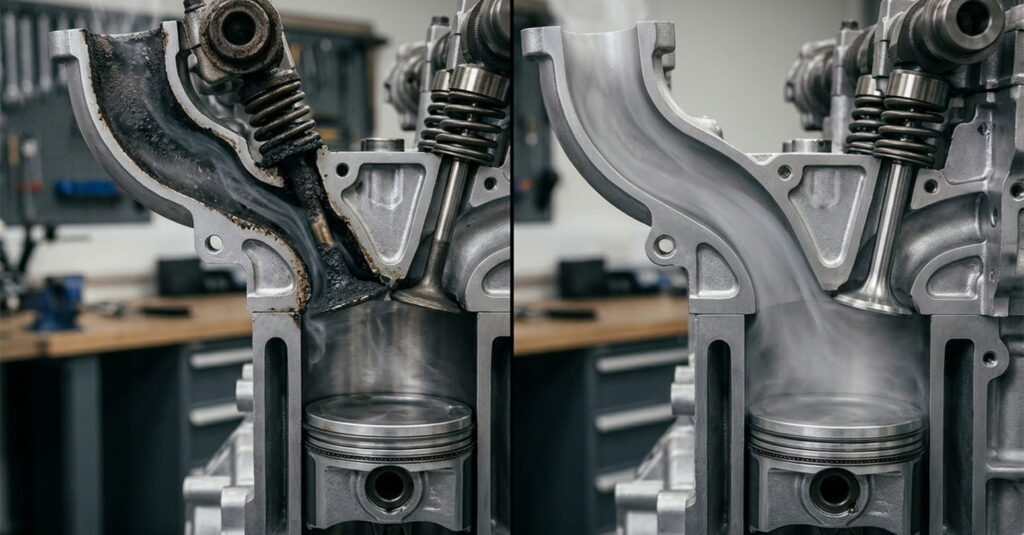
Yes, when intake valve deposits are the problem. Carbon buildup narrows the valve opening, so the cylinder gets less air than it needs. The engine adjusts fuel delivery to compensate, but that only partially offsets the restriction. Clear the deposits, and combustion runs on the air-fuel mixture the engine was built for.
How much difference you notice depends on how long the deposits have been building. Catching it early means less damage to undo. Regular cleaning keeps your engine performing the way it was built to, rather than quietly losing ground between services.
Frequently Asked Questions
1. Can valve cleaner fix a rough idle in a direct-injection engine?
It can, if carbon buildup on the intake valves is the cause. This is a recognised issue in direct-injection engines, documented in GDI service records, because fuel does not wash the valves as it enters the cylinder. If the idle smooths out after the engine warms up, that pattern points to deposit-related airflow disruption, and a valve cleaner addresses that specific cause. If the idle is rough at all temperatures or accompanied by consistent misfire codes, a workshop inspection is the right step.
2. How is a valve cleaner different from a fuel injector cleaner?
Fuel injector cleaners work on the injector nozzles and the fuel delivery pathway. The intake valve stems are a separate location: deposits there come from oil vapour and exhaust residue, not fuel residue. In direct-injection engines, these are two separate deposit locations because fuel never contacts the intake valves. Some fuel system additives cover both, cleaning from the intake valve through to the injectors in one treatment. The Estremo guide on fuel injector cleaner and fuel economy covers what injector-side cleaning does for your running costs.
3. Does valve cleaner work on port-injection engines too?
Port-injected engines are much less prone to intake valve deposits because fuel washes over the valves on every cycle. That rinse keeps the valve surfaces relatively clean under normal conditions. Carbon deposits can still form on port-injection valves if the engine runs rich or uses oil at a high rate, but the problem is far less common. Direct-injection engines need it most, since fuel never contacts the valves at all. That is where buildup tends to become noticeable past the 50,000 km mark.
4. How often should a valve cleaner be used to maintain engine performance?
Estremo’s Nano Fuel Cleaner works best when used every 5,000 km, which keeps deposits from hardening between services. For a car with existing symptoms, a more targeted cleaning cycle may be needed first. If the cold-start roughness persists after a couple of cleaning cycles, a borescope inspection at a workshop can confirm whether deposits remain or whether the cause is elsewhere.
5. Can valve deposits cause long-term engine damage if left untreated?
If left untreated for years, heavy valve deposits can cause problems beyond rough idling and reduced efficiency. Heavy carbon buildup creates hot spots that stop the valve from closing properly. In severe cases, the engine struggles to compensate, temperatures rise in the intake, and the valve itself starts to wear out faster. The earlier you catch it, the simpler the fix. Once deposits harden into a thick layer, removing the intake manifold for physical cleaning is the only option.
The carbon that builds on intake valves is not the same problem as injector fouling or combustion chamber deposits. Each forms in a different part of the engine and needs its own approach. In direct-injection engines, deposits build up on the intake valves slowly, well before they cause an obvious problem. Pour Estremo’s Nano Oil Cleaner into the engine oil before an oil change to clear sludge, free stuck rings, and remove oil-circuit deposits that a fuel additive cannot reach. If your car has been rough on cold starts or response has softened over time, the intake valves are the first place worth checking.