Key Takeaways
- Auto transmission fluid does four jobs at once: it lubricates, cools, cleans, and transmits hydraulic pressure inside an automatic gearbox.
- Heat is the primary cause of ATF degradation. Fluid that has exceeded its thermal limit changes colour, loses viscosity, and forms varnish deposits on internal components.
- The clearest signs that car ATF needs changing include rough or delayed gear shifts, a burnt smell on the dipstick, dark or opaque fluid, and unusual noises at low speed.
- A “lifetime fill” label on a transmission does not mean the fluid never needs changing. It refers to expected service life under ideal conditions, not real-world daily driving.
- A quality supplemental treatment added at each fluid change extends protection and helps address early signs of wear before they become costly.
Introduction
An automatic transmission changes gears dozens of times on any trip without the driver doing anything. That level of constant mechanical activity generates heat, friction, and hydraulic pressure. The fluid managing all of it has a finite service life.
The problem is that transmission fluid degradation is largely invisible until the symptoms become obvious. By then, internal components have usually been running under stress for longer than they should. Rough shifts, hesitation, or a burnt smell on the dipstick are signals that the fluid has already degraded significantly. Catching them early is the difference between a fluid change and a transmission rebuild that can cost thousands.
This guide covers what this fluid actually does, how it degrades, the signs to watch for, and which products support transmission health between service intervals.
What Is Auto Transmission Fluid?
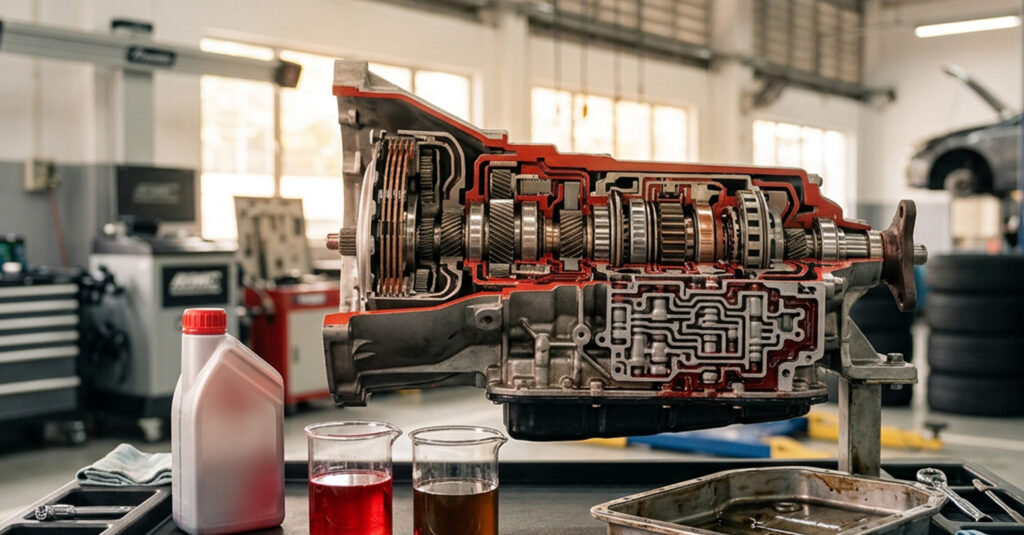
Auto transmission fluid is a specialised hydraulic and lubricating fluid used in vehicles with automatic transmissions. It lubricates the gears, bearings, and clutch packs. It also acts as the hydraulic medium for gear selection through the valve body, transmitting pressure that physically moves clutches and bands into position. At the same time, it carries heat away from friction surfaces and holds contaminants in suspension until the next drain. ATF is friction-modified to precise specifications, so clutch engagement happens smoothly and consistently. Unlike engine oil, which works in a pressurised circulating system, ATF operates under both lubrication and hydraulic pressure demands simultaneously.
How Does ATF Degrade Over Time?
Heat is the dominant cause of ATF breakdown. The Automatic Transmission Rebuilders Association reports that nearly nine out of ten automatic transmission failures are caused by overheating and fluid contamination. Normal operating temperatures for an automatic transmission run around 175°F (80°C). When fluid runs hotter for extended periods, oxidation accelerates. The chemical composition of the fluid changes. Viscosity modifiers break down under shear stress. Friction modifiers deplete. The fluid that was once clear and precisely calibrated becomes dark, acidic, and contaminated with metallic particles from normal wear.
Oxidation is only one degradation pathway. Shear stress from the torque converter scissoring through viscosity modifier molecules causes permanent viscosity loss. Water contamination from condensation or a leaking cooler depletes oxidation inhibitors and competes with friction modifiers for contact with clutch surfaces. Each of these processes happens independently and compounds over time. A transmission running under demanding conditions experiences all three simultaneously.
ATF does not announce its own degradation. The fluid can look acceptable at a glance, while its friction characteristics have already changed enough to affect shift quality and clutch engagement. The only reliable way to know its condition is to check it properly and follow a scheduled change interval.
Varnish and sludge accumulation are the visible result of prolonged ATF degradation. Metal particles from normal wear mix with oxidised oil and form deposits on valve body components, solenoids, and clutch pack surfaces. These deposits restrict fluid flow and interfere with the precise hydraulic control the transmission depends on for accurate gear selection. Once varnish forms on solenoids, the shift response becomes inconsistent even if fresh fluid is added on top of it. Cleaning those deposits requires a flush or a treatment product, not just a drain and refill.
Signs Your Car’s ATF Needs Changing

Most signs of degraded ATF appear during normal driving before any warning light activates. Knowing what to look for means you can act before the transmission sustains damage.
Rough or delayed gear shifts
Smooth gear changes depend on precise friction characteristics in the ATF. As the fluid degrades, clutch engagement becomes less controlled. You may notice a brief hesitation between selecting Drive and the transmission engaging, or a harder-than-usual shift between gears under acceleration. This symptom tends to start subtly and worsen progressively as the fluid continues to deteriorate.
Burnt smell or dark fluid colour
Fresh ATF ranges from clear to light red depending on the product. When the fluid has overheated or oxidised, it turns dark brown or black and develops a distinct burnt smell. Checking the dipstick colour at a routine service is one of the simplest ways to assess fluid condition. Clear and bright indicates the fluid is still serviceable. Dark and opaque means it needs attention.
The smell test is as reliable as the visual check. Fresh ATF has a mild, slightly sweet odour. Fluid that has been running at high temperatures develops a sharp, acrid smell from oxidation and clutch material contamination. Both signs together are a clear indicator that a fluid change is due, not optional.
Shudder or vibration during gear changes.
Shudder during gear engagement is a specific symptom of friction modifier depletion in the ATF. As the friction coefficient between the clutch plates and the fluid changes, smooth clutch engagement becomes difficult to maintain. The clutch pack alternately grips and slips during engagement, producing a shudder that drivers often feel through the gear selector or floor. This symptom is a reliable indicator that the fluid’s friction characteristics have degraded beyond the specification the clutch packs were designed to work with.
Unusual noises at low speed or in park
Worn or contaminated ATF can allow internal components to run without adequate lubrication during the brief period after a cold start, before the fluid reaches operating temperature and circulates fully. Whining, humming, or clunking sounds that appear at low speed or when the vehicle is stationary with the engine running warrant a fluid check. These sounds can also relate to a low fluid level from a leak, which is a separate issue but produces similar symptoms.
Slipping between gears
A transmission that slips out of gear under load, or revs up before the next gear engages under acceleration, has lost the hydraulic pressure or clutch friction it needs to hold the gear. Degraded fluid contributes to both problems. Low viscosity from fluid breakdown reduces hydraulic pressure. Depleted friction modifiers reduce clutch holding force. Either can cause the transmission to disengage unexpectedly under load.
Slipping is one of the more serious symptoms because it signals that the transmission is under active stress every time it happens. Each slip event generates additional heat, which further accelerates fluid degradation and clutch wear. Continuing to drive with a slipping transmission compounds the damage at every gear change, making an early fluid inspection the more sensible response than waiting to see if the symptom resolves on its own.
When Should You Change Auto Transmission Fluid?
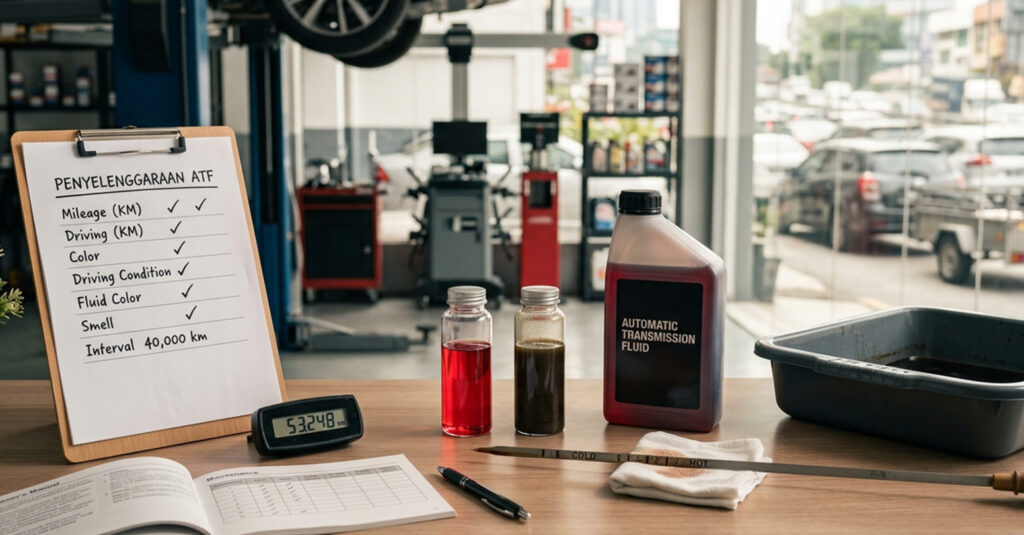
Replacement intervals for ATF vary by vehicle. A common range for normal driving conditions runs between 50,000 km and 80,000 km. Vehicles used for towing, urban stop-start driving, or sustained high-load conditions generate more heat and benefit from shorter intervals.
The “lifetime fill” designation that appears on some manufacturer schedules is worth treating with caution. Independent transmission specialists consistently recommend changing lifetime-fill fluids regularly, noting that the designation reflects expected service life under ideal conditions rather than real-world use. A transmission running on degraded fluid that was labelled “lifetime” is still running on degraded fluid. The label changes nothing about the chemistry.
Checking fluid condition at each routine service is a practical step regardless of mileage. Pull the dipstick with the engine warm and the transmission in Park. Clear or light-coloured fluid indicates a serviceable condition. Dark, opaque, or burnt-smelling fluid points to an overdue change. Vehicles without a dipstick require a workshop inspection to assess fluid condition directly. Your owner’s manual specifies the correct fluid type and the manufacturer’s recommended interval. That is the starting point. For vehicles operating in demanding conditions, a more conservative interval is worth applying.
How Nano ATF Care Supports Transmission Health
A quality transmission fluid protects the gearbox through its service interval. Adding a supplemental treatment at each fluid change extends that protection and addresses gaps that the base fluid cannot cover on its own.
Estremo’s Nano ATF Care is formulated using nanotechnology to revitalise the performance of worn or problem transmissions. It rejuvenates seals, cleans and lubricates sticking valves for proper shifting, and helps address gear shift hesitation and rough shifting in worn transmissions. Add one bottle of 250ml to the existing transmission oil tank or when installing fresh fluid. It’s compatible with both existing fluid and fresh changes.
For CVT-equipped vehicles, the Nano CVT & AT Treatment covers the same protective role for continuously variable transmissions. Add 250ml per 6 to 8 litres of transmission fluid, ideally at every oil change interval.
Both products address transmission wear at the supplemental level, not as a substitute for using the correct fluid or following a sensible change schedule. They work best when used consistently alongside the right base fluid, not as a reactive fix after symptoms have already developed.
How Do You Know If Your Car’s ATF Needs Changing Now?
The clearest signals are dark or burnt-smelling fluid on the dipstick, rough or delayed gear shifts, shudder during gear engagement, and unusual transmission noise. Any one of these points to fluid that has degraded beyond its rated service life. If two or more appear together, a fluid change is overdue. For vehicles without a transmission dipstick, a workshop inspection is the only way to assess fluid condition directly.
Frequently Asked Questions
1. What does the fluid in an automatic transmission do?
Auto transmission fluid lubricates internal components, acts as the hydraulic medium for gear selection, carries heat away from friction surfaces, and holds contamination in suspension. It’s also friction-modified to control clutch engagement precisely. Without it functioning correctly, gear shifts become rough, hydraulic pressure drops, and internal components wear faster than they should under normal service conditions.
2. How often should transmission fluid be changed in an automatic car?
A typical change interval under normal driving conditions runs between 50,000 km and 80,000 km. Vehicles used for towing, stop-start urban driving, or sustained high-load use benefit from shorter intervals. Always check your owner’s manual for the manufacturer’s recommended interval and approved fluid specifications.
3. What happens if I don’t change ATF on time?
Degraded ATF loses its viscosity, depletes its friction modifiers, and accumulates metallic particles and varnish deposits from internal wear. This leads to rougher shifts, reduced hydraulic pressure, increased wear on clutch packs and seals, and eventually transmission overheating or failure. The repair cost for a damaged automatic transmission significantly outweighs the cost of a scheduled fluid change. A transmission rebuild can run into thousands depending on the vehicle, and in severe cases, the transmission requires full replacement rather than repair.
4. Is auto transmission oil the same as engine oil?
No. Auto transmission oil is a completely different product from engine oil. ATF is friction-modified, lighter in viscosity, and designed for the hydraulic and lubrication demands of an automatic gearbox. Engine oil is formulated for engine lubrication, heat resistance, and detergency in a pressurised circulating system. Using one in place of the other causes serious damage to whichever system receives the wrong fluid. They are not interchangeable under any circumstances.
5. Can a transmission additive fix rough shifting?
A quality additive like Nano ATF Care can help address early-stage shift hesitation by rejuvenating seals and cleaning sticking valve body components. It is not a fix for mechanical damage or a substitute for a fluid change that is overdue. For best results, use it alongside a fresh fluid change at a scheduled service interval rather than as a standalone remedy after symptoms become severe.
Conclusion
Automatic transmission health depends on one thing more than any other: fluid condition. ATF that has degraded through heat, oxidation, or shear stress no longer protects the clutch packs, seals, and valve body the way it was designed to. The signs of degradation are observable before the damage becomes permanent. Dark or burnt fluid, rough shifts, shudder, and unusual noise are all signals worth acting on promptly. Addressing them at the fluid-change stage is far less disruptive than addressing them at the rebuild stage. A scheduled fluid change using the correct fluid type for your vehicle, combined with a supplemental treatment at each service interval, gives the transmission the protection it needs across the full span of its working life. Explore Estremo’s full auto transmission oil and additive range to find the right products for your vehicle type.