Key Takeaway
- The most reliable way to improve fuel efficiency is consistent maintenance, not just adjusting how you drive.
- Low tyre pressure, dirty fuel injectors, degraded engine oil, and clogged air filters all force your engine to burn more fuel than it should.
- Most fuel-saving tips focus on driving habits, but maintenance fixes work on every single drive without extra effort from you.
- Keeping your fuel system and engine in good condition is what makes fuel efficient driving the default, not something you have to consciously maintain.
- None of the fixes here are complicated or expensive, and each one compounds on the others.
Introduction
Fuel prices fluctuate, but your car’s fuel consumption is something you can actually control. Most fuel-saving tips are about how you drive: lift off the accelerator earlier, avoid hard braking, keep speeds down. That all works. But it demands constant attention every time you’re behind the wheel.
Maintenance fixes are different. Sort out an issue once, and your car runs more efficiently on every drive after that, whether you’re thinking about it or not. If you want to improve fuel efficiency in a lasting, low-effort way, maintenance is where to start.
Why a Neglected Car Burns More Fuel
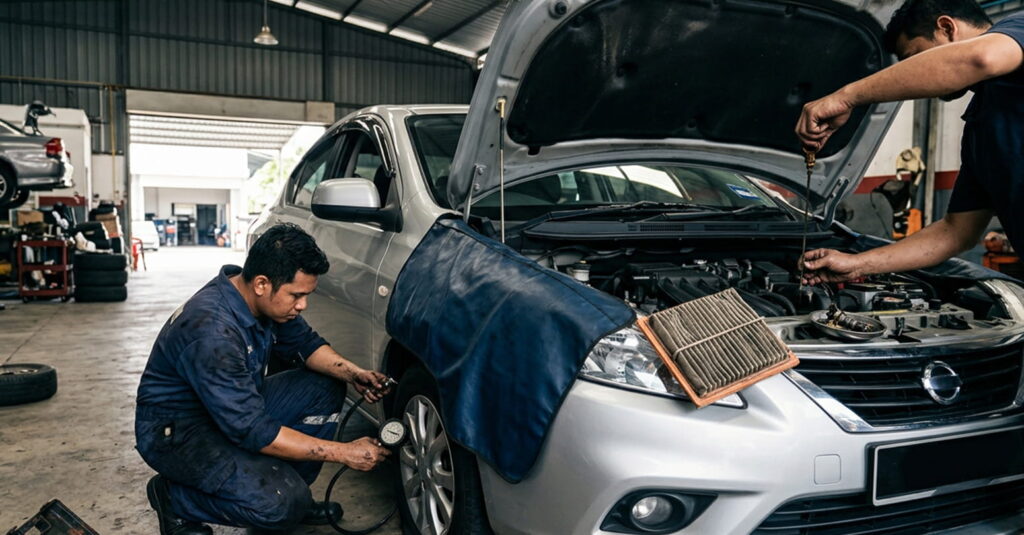
Your engine is essentially converting fuel into movement. Anything that makes that conversion less efficient means more fuel gets burned to cover the same distance.
Low tyre pressure forces the engine to push harder against more road resistance. A dirty air filter cuts the oxygen supply the engine needs to burn fuel cleanly. Engine oil that’s overdue for a change creates more internal drag (friction between moving parts). A partially blocked fuel injector means fuel isn’t delivered in the right spray pattern, so it doesn’t burn as completely as it should.
Each of these on its own makes a difference. Several together, and the engine is working noticeably harder than it needs to on every journey.
Maintenance Tips That Directly Help You Reduce Fuel Consumption
Keep Your Tyres Properly Inflated
This one surprises a lot of drivers, partly because tyres lose pressure so slowly that you don’t notice until it’s already eating into your fuel economy.
An underinflated tyre creates more resistance between the rubber and the road. The engine uses more power just to keep moving, which means more fuel on every trip. Government fuel efficiency research found that tyres at 75% of recommended pressure increase fuel use by around 2-3%, and tyres at 50% increase it by 5-10%. Those percentages add up over months of driving.
The right pressure for your car is on a sticker inside the driver’s door frame, not on the tyre itself. Check it at least once a month and before any long drive.
Low tyre pressure is one of the most common and fixable causes of higher fuel use. A monthly pressure check is a simple habit that genuinely helps reduce fuel consumption at the pump.
Clean Your Fuel Injectors
Fuel injectors spray petrol or diesel into the engine in a very precise pattern. Over time, carbon deposits build up on the tiny nozzle openings and distort that spray. When the fuel doesn’t atomise properly, it doesn’t mix with air or burn as well, so the engine ends up using more fuel to do the same work.
Adding a fuel system cleaner to your tank every 5,000km dissolves those deposits before they build up enough to cause problems. Estremo’s Nano Octane 108 & Injector Cleaner does this for petrol engines. For diesel vehicles, the Nano Diesel Cleaner handles the same job for common rail direct injection systems.
Estremo’s fuel injector guide goes deeper into how injector condition and fuel economy connect.
Use the Right Engine Oil and Change It on Time
Old or incorrect engine oil creates more drag inside the engine. The internal parts don’t move against each other as smoothly, and that extra friction burns fuel. It’s a quiet inefficiency that builds up over time rather than announcing itself.
The fix is straightforward: use the oil grade your vehicle manufacturer specifies, and change it on schedule. For fuel economy specifically, Estremo SynGlide is the closest fit: its ultra-low friction formulation is designed to reduce internal friction and support efficient engine running on daily commutes and long journeys. Estremo’s HeatPro fully synthetic is the better fit if your engine runs hot regularly or you spend a lot of time in stop-and-go traffic. For a deeper look at how oil quality affects engine performance, the engine oil additive page explains how the right additives keep your engine working efficiently.
Old engine oil creates more drag inside the engine on every single drive. Changing it on schedule is one of the quieter ways to improve fuel efficiency
without doing anything different at the wheel.
Check Your Air Filter

Your engine needs air to burn fuel. A clogged air filter reduces the amount of clean air that gets through, which throws off the fuel-to-air balance. The engine can’t burn fuel as cleanly, and fuel consumption creeps up as a result.
Checking the air filter is simple. Pull it out and hold it up to the light. If it’s brown or grey and you can’t see through it easily, it needs replacing. In Malaysian conditions, dust and humidity clog filters faster than the standard service interval assumes. Checking every 15,000km rather than waiting for a scheduled service is worth building into your routine.
Do an Engine Flush Before Switching Oils
If your engine has accumulated sludge from oil that ran past its service interval, that residue adds resistance and reduces how efficiently fresh oil can circulate. An engine flush clears it out before your next oil change so the new oil starts clean.
Estremo’s engine flush guide explains when it’s worth doing and how to go about it.
How Much Does Maintenance Actually Improve Fuel Efficiency?
No single fix transforms fuel consumption overnight. But the combined effect of properly inflated tyres, clean injectors, fresh oil, and a clear air filter removes several layers of inefficiency at once. A car running on degraded oil, underinflated tyres, and a partially blocked injector is working harder than it should be on every single drive. Get those things right, and the improvement builds quietly over time.
| Maintenance Action | Why It Helps |
| Correct tyre pressure | Less road resistance for the engine to push against |
| Clean fuel injectors | Fuel burns more completely instead of being partly wasted |
| Fresh synthetic engine oil | Less internal friction means less wasted energy |
| Clean air filter | Engine burns fuel at the right ratio with air |
| Engine flush | Removes sludge so oil circulates properly |
What Maintenance Makes the Biggest Difference to Fuel Economy?
Tyre pressure and oil condition have the most consistent impact on overall fuel economy. Keeping both right is the foundation of fuel efficient driving that carries over to every trip you take. Pressure affects every single drive, and oil condition compounds over weeks and months. If you want to improve fuel efficiency without any change to how you drive, start with these two.
Frequently Asked Questions

1. Does engine oil really affect fuel efficiency?
Yes. Old or wrong-grade oil thickens and creates more friction between the engine’s moving parts. The engine burns more fuel to overcome that drag. Switching to a low friction fully synthetic oil such as Estremo SynGlide, matched to your manufacturer’s specification, and changing it on schedule is one of the quieter ways to improve fuel efficiency.
2. How much does tyre pressure affect fuel consumption?
Quite a bit, given how easy it is to fix. Tyres at 75% of recommended pressure use around 2-3% more fuel, and tyres at 50% use 5-10% more. Checking pressure monthly is one of the most effective fuel-saving tips because it takes five minutes and costs nothing.
3. Does cleaning the fuel injectors reduce fuel consumption?
Yes, particularly in higher-mileage engines. Carbon buildup on injector nozzles disrupts the fuel spray, so less of the fuel that enters the engine actually burns. Cleaning the fuel system periodically with an additive like Estremo’s Nano Octane 108 & Injector Cleaner restores that spray pattern and improves combustion efficiency.
4. How often should I use a fuel system cleaner?
Every 5,000km for petrol engines. For diesel vehicles with common rail direct injection systems, the Nano Diesel Cleaner is used every 15,000km. Check the product instructions for the exact interval.
5. Can a dirty air filter affect how much fuel my car uses?
Yes. A clogged air filter reduces the airflow the engine needs to burn fuel efficiently. When the engine doesn’t get enough clean air, fuel consumption tends to rise. In Malaysia’s dusty and humid conditions, air filters can clog faster than the standard service interval accounts for.
Fuel efficiency is the result of how well everything in your car is running, not one thing done perfectly. Keeping your tyres at the right pressure, your fuel system clean, your oil fresh, and your air filter clear removes the most common sources of wasted fuel and makes fuel-efficient driving the default. Estremo’s product range covers the fuel system and engine oil side of that equation. Browse the full range to find what suits your vehicle.